Plus.Maths.org
Articles
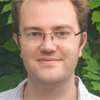
Our neighbour Oscar Randal-Williams tells us about his exciting work at the frontiers of mathematics and the fundamental question he might be just about to answer!
We are very pleased to be launching this network for those working in, and with a stake in, communicating complex mathematics and data science to a variety of non-expert audiences.
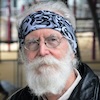
The Abel Prize 2024 has been awarded to Michel Talagrand for ground breaking contributions to probability theory and functional analysis.

Celebrate pi day with some of our favourite ideas from the mathematical sciences!

How did the all the stars and galaxies end up where we see them today? The very first instance of the Universe's existence holds the answer.


Find out about one of the most significant developments in artificial intelligence!

You've heard about AI in science fiction, but now we frequently hear it discussed in the media, in debates in government and even in the pub. Find out what it means so you can be part of the conversation.

We're proud to announce the launch of a school curriculum and public engagement project which gives a hands-on experience of mathematical research and its benefits for society.
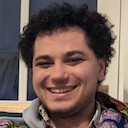
As part of our series of interviews with early career researchers, Kweku tells us why he enjoys statistics, life as an early career researcher, and about a favourite mathematical moment.