

Do you know what's good for you? — The maths of infectious diseases
Infectious diseases hardly ever disappear from the headlines — swine flu is only the last in a long list containing SARS, bird flu, HIV, and childhood diseases like mumps, measles and rubella. If it's not the disease itself that hits the news, then it's the vaccines with their potential side effects. It can be hard to tell the difference between scare mongering and responsible reporting, because media coverage rarely provides a look behind the scenes. How do scientists reach the conclusions they do? How do they predict how a particular disease will spread, and whether it is likely to mutate into a more dangerous strand? And how do they assess the impact of an intervention like vaccination, and make sure that a vaccine is safe?
The five articles listed below, together with the podcast, provide some answers to these questions. If you're a teacher exploring the maths of epidemiology with your students, then have a look at our classroom activity, accompanying the articles. And whoever you are, we'd like to find out what kind of information you found the most useful during the current swine flu outbreak — so please take part in our quick online poll.
This package is part of a series on the role of maths and stats in the biomedical sciences, produced with generous support from the Wellcome Trust.
 Keeping track of immunityDengue fever does the opposite of what you might expect. Unlike for many diseases, if you've had this tropical virus and recovered, you might be worse off, as a second exposure to the dengue virus can be life threatening. So keeping track of the strains of the diseases is an important problem which can be solved with the help of a little randomness. Read more...  Uncovering the cause of choleraLondon, September, 1853. A cholera outbreak has decimated Soho, killing 10% of the population and wiping out entire families in days. Current medical theories assert that the disease is spread by "bad air" emanating from the stinking open sewers. But one physician, John Snow, has a different theory: that cholera is spread through contaminated water. And he is just about to use mathematics to prove that he is right.Read more...  Protecting the nation: The podcastWe talk to Paddy Farrington, Professor of Statistics at the Open University, about issues surrounding vaccination safety. Hear more...  Protecting the nationVaccination is an emotive business. The furore around the MMR vaccine and autism has shown that vaccination health scares can cause considerable damage: stop vaccinating, and epidemics are sure to follow. But how do scientists decide whether a vaccine and a vaccination strategy are effective and safe? (This article is accompanied by a podcast.) Read more...  Influenza virus: It's all in the packagingWe have all become more aware of the dangers of influenza this year, but why is it so dangerous? Julia Gog explains that the unusual structure of the influenza genome can lead to dangerous evolutionary jumps, and how mathematics is helping to understand how the virus replicates. Read more... 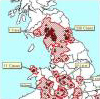 The mathematics of diseasesOver the past one hundred years, mathematics has been used to understand and predict the spread of diseases, relating important public-health questions to basic infection parameters. Matthew Keeling describes some of the mathematical developments that have improved our understanding and predictive ability. Read more...  Swine flu uncertaintyWhen a new infectious disease has broken out, how do you get those vital first estimates on numbers of infected and dead. This article, a news item from July 2009, looks at monitoring systems. Read more...  Pan(dem)ic?Swine flu has turned out to be much milder than was feared at first, leading to accusations of initial hype levelled at the government and scientists. But even at the start of the outbreak, scientists were accused at scare mongering. This article, a news item from May 2009, explains how prediction about the spread of the infection are made. Read more...  Don't blame it on the tubeBuses may be safer than babies, at least when it comes to swine flu. Preliminary results from an online flu survey suggest that contact with children poses one of the greatest swine flu risk factors, while the use of public transport seems surprisingly safe. Read more...  A symmetry approach to virusesResearchers are uncovering new insights into the structures of viruses and the mechanisms underlying virus assembly, and how this potentially opens up novel possibilities for anti-viral drug design. Read more...  Beating bird flu with bills— Travelling bank notes mimic the spread of diseases. Read more... |
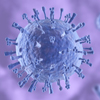 Classroom activity: Build your own diseaseThis activity explores epidemiological models using basic probability theory. It also involves exponential growth and geometric progressions. |