Skip to Navigation
Home
  • about Plus
  • support Plus
  • Plus sponsors
  • subscribe to Plus
  • terms of use

The trouble with five

Issue 45
in
  • 45
  • editorial
December 2007

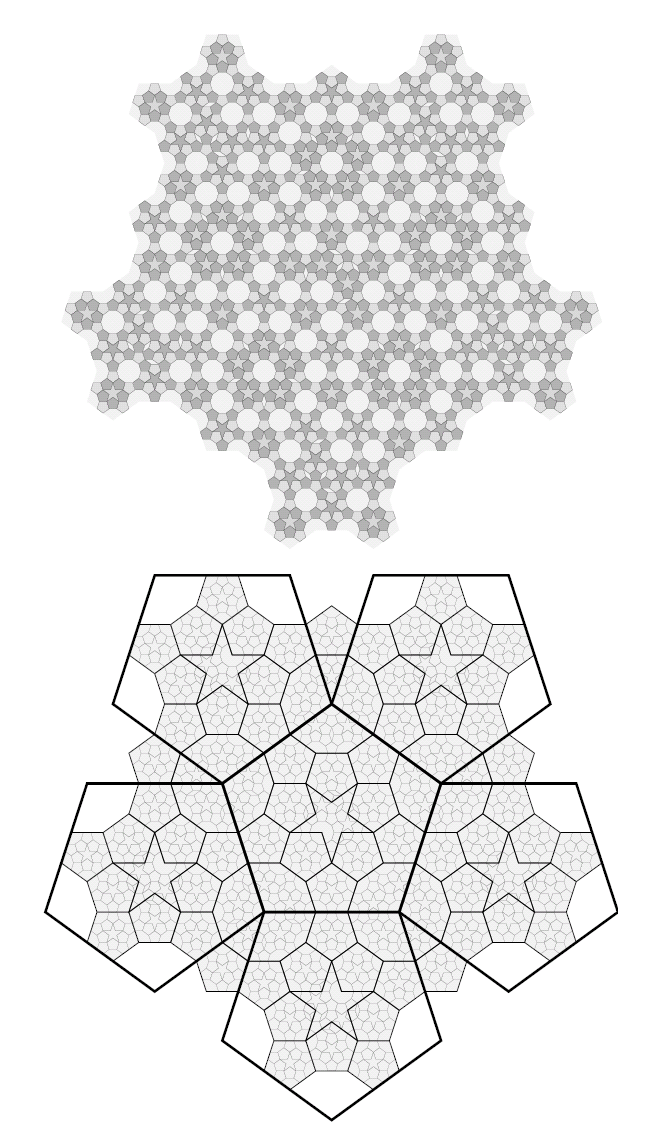
Figure 14: A small part of a tiling produced from pentagons and rhombi via two applications of the subtitution rules in figure 13. The bottom diagram shows the relationships between tiles at all levels of substitution.

Figure 14: A small part of a tiling produced from pentagons and rhombi via two applications of the subtitution rules in figure 13. The bottom diagram shows the relationships between tiles at all levels of substitution.

Back to the article
  • Home
  • Articles
  • Careers
  • Blog
  • News
  • Packages
  • Podcasts
  • Posters
  • Puzzles
  • Reviews
Building a bio computer
Yesterday's refusal by the UK government to posthumously pardon Alan Turing makes sad news for maths,...
view
Having fun with unit fractions
The number 1 can be written as a sum of unit fractions, that is fractions with 1 in the numerator. But how...
view
Constructing our lives: the mathematics of engineering
What do Gollum, the new Olympic stadium that's being built in London and the quest for sustainable energy...
view
Science fiction, science fact: Is there free will?
Is there such a thing as free will? In everyday life we all assume that there is: it's up to you whether you...
view
Support Plus
Make a difference to mathematics
view

tags

  • editorial

Login to comment or download PDFs

  • Create new account
  • Request new password
Syndicate content

Cambridge University logo

Also on Plus:

Plus Magazine
Sundaram's Sieve
Sundaram's Sieve
Sundaram's Sieve
Sundaram's Sieve
Births and deaths in fluid chaos