







general relativity
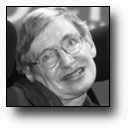
Plus is very proud to present Professor Stephen Hawking's own Birthday Symposium address.
This issue of Plus is a special, marking the occasion of Stephen Hawking's 60th birthday. Plus attended his Birthday Conference in Cambridge, where we interviewed some of the world's most influential mathematicians and physicists.
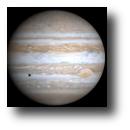
Scientists have for the first time measured the speed of gravity and tested Einstein's assumption - or have they?
One of the many strange ideas from quantum mechanics is that space isn't continuous but consists of tiny chunks. Ordinary geometry is useless when it comes to dealing with such a space, but algebra makes it possible to come up with a model of spacetime that might do the trick. And it can all be tested by a satellite. Shahn Majid met up with Plus to explain.
Over the last few years the words string theory have nudged their way into public consciousness. It's a theory of everything in which everything's made of strings — or something like that. But why strings? What do they do? Where did the idea come from and why do we need such a theory? David Berman has an equation-free introduction for beginners.

The world's biggest physics experiment is due to start
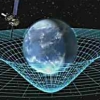
Will Einstein's general theory of relativity hold true?
Mathematicians give green light for time machine
With online socialising and alternative realities like Second Life it may seem as if reality has become a whole lot bigger over the last few years. In one branch of theoretical physics, though, things seem to be going the other way. String theorists have been developing the idea that the space and time we inhabit, including ourselves, might be nothing more than an illusion, a hologram conjured up by a reality which lacks a crucial feature of the world as we perceive it: the third dimension. Plus talks to Juan Maldacena to find out more.
And what are gravitational waves?