
Home
plus.maths.org

Secondary menu

  • My list
  • About Plus
  • Sponsors
  • Subscribe
  • Contact Us
  • Log in
  • Main navigation

  • Home
  • Articles
  • Collections
  • Podcasts
  • Maths in a minute
  • Puzzles
  • Videos
  • Topics and tags
  • For

    • cat icon
      Curiosity
    • newspaper icon
      Media
    • graduation icon
      Education
    • briefcase icon
      Policy

    Popular topics and tags

    Shapes

    • Geometry
    • Vectors and matrices
    • Topology
    • Networks and graph theory
    • Fractals

    Numbers

    • Number theory
    • Arithmetic
    • Prime numbers
    • Fermat's last theorem
    • Cryptography

    Computing and information

    • Quantum computing
    • Complexity
    • Information theory
    • Artificial intelligence and machine learning
    • Algorithm

    Data and probability

    • Statistics
    • Probability and uncertainty
    • Randomness

    Abstract structures

    • Symmetry
    • Algebra and group theory
    • Vectors and matrices

    Physics

    • Fluid dynamics
    • Quantum physics
    • General relativity, gravity and black holes
    • Entropy and thermodynamics
    • String theory and quantum gravity

    Arts, humanities and sport

    • History and philosophy of mathematics
    • Art and Music
    • Language
    • Sport

    Logic, proof and strategy

    • Logic
    • Proof
    • Game theory

    Calculus and analysis

    • Differential equations
    • Calculus

    Towards applications

    • Mathematical modelling
    • Dynamical systems and Chaos

    Applications

    • Medicine and health
    • Epidemiology
    • Biology
    • Economics and finance
    • Engineering and architecture
    • Weather forecasting
    • Climate change

    Understanding of mathematics

    • Public understanding of mathematics
    • Education

    Get your maths quickly

    • Maths in a minute

    Main menu

  • Home
  • Articles
  • Collections
  • Podcasts
  • Maths in a minute
  • Puzzles
  • Videos
  • Topics and tags
  • Audiences

    • cat icon
      Curiosity
    • newspaper icon
      Media
    • graduation icon
      Education
    • briefcase icon
      Policy

    Secondary menu

  • My list
  • About Plus
  • Sponsors
  • Subscribe
  • Contact Us
  • Log in
  • Erasing experimental error

    by
    Helen Joyce
    24 November, 2003
    24/11/2003


    Less than 2% experimental error doesn't sound too bad, when Plus thinks back to secondary school science classes, but it was a big cause for concern for the government, when they counted 1 million people fewer than expected in the 2001 UK census.

    However, one legacy of this experiment has proved to be an unqualified success. To tie in with the census, the Centre for Statistical Education, in conjunction with National Statistics, set up a project called CensusAtSchool, whereby children would complete a simple questionnaire about their home lives and school experience. The aim of the project was to provide real data for use across the National Curriculum and improve data handling in the classroom: "Real data, real learning" as the CensusAtSchool slogan states.

    Over 60,000 children completed questionnaires and the project, originally designed as a one-off, has proved so successful that it is being continued within the UK, and CensusAtSchool programmes are now also being run in the US, Canada, Australia, New Zealand and South Africa.

    Following on from this success, a similar project entitled ExperimentsAtSchool has just been launched, dealing with experimental, rather than social, data. Students carrying out experiments in their own classrooms are now able to upload their results to a national database, and also download data from students in other schools around the country to use in their analyses.
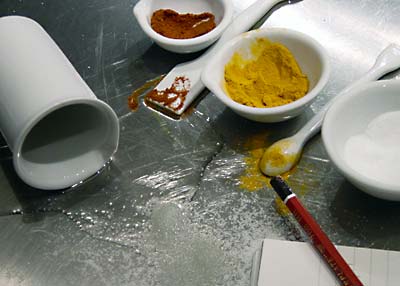
    Experimental error?

    Experimental error?

    If it proves as successful as its predecessor, this project has the potential to revolutionise the way science is taught in our schools. In an ideal world, the study of science would involve repeating experiments many times in order to reduce error, but in the classroom time constraints often compel teachers to declare any discrepancy between expected and observed results simply to be "experimental error" before moving on. By using ExperimentsAtSchool children could, in effect, repeat their experiments many hundreds of times.

    But the availability of scientific results is only part of the benefit of this project. As with CensusAtSchool, it is the experience of quality data handling and analysis which will perhaps most benefit students. Recent studies have shown that the numeracy skills most often demanded by employers are those concerned with data handling. Innovative programmes such as these might just close the gap between these expected, and observed, results of our education system.

    Read more about...
    statistics
    numeracy
    data analysis
    data handling
    census
    • Log in or register to post comments

    Read more about...

    statistics
    numeracy
    data analysis
    data handling
    census
    University of Cambridge logo

    Plus is part of the family of activities in the Millennium Mathematics Project.
    Copyright © 1997 - 2025. University of Cambridge. All rights reserved.

    Terms