
Home
plus.maths.org

Secondary menu

  • My list
  • About Plus
  • Sponsors
  • Subscribe
  • Contact Us
  • Log in
  • Main navigation

  • Home
  • Articles
  • Collections
  • Podcasts
  • Maths in a minute
  • Puzzles
  • Videos
  • Topics and tags
  • For

    • cat icon
      Curiosity
    • newspaper icon
      Media
    • graduation icon
      Education
    • briefcase icon
      Policy

    Popular topics and tags

    Shapes

    • Geometry
    • Vectors and matrices
    • Topology
    • Networks and graph theory
    • Fractals

    Numbers

    • Number theory
    • Arithmetic
    • Prime numbers
    • Fermat's last theorem
    • Cryptography

    Computing and information

    • Quantum computing
    • Complexity
    • Information theory
    • Artificial intelligence and machine learning
    • Algorithm

    Data and probability

    • Statistics
    • Probability and uncertainty
    • Randomness

    Abstract structures

    • Symmetry
    • Algebra and group theory
    • Vectors and matrices

    Physics

    • Fluid dynamics
    • Quantum physics
    • General relativity, gravity and black holes
    • Entropy and thermodynamics
    • String theory and quantum gravity

    Arts, humanities and sport

    • History and philosophy of mathematics
    • Art and Music
    • Language
    • Sport

    Logic, proof and strategy

    • Logic
    • Proof
    • Game theory

    Calculus and analysis

    • Differential equations
    • Calculus

    Towards applications

    • Mathematical modelling
    • Dynamical systems and Chaos

    Applications

    • Medicine and health
    • Epidemiology
    • Biology
    • Economics and finance
    • Engineering and architecture
    • Weather forecasting
    • Climate change

    Understanding of mathematics

    • Public understanding of mathematics
    • Education

    Get your maths quickly

    • Maths in a minute

    Main menu

  • Home
  • Articles
  • Collections
  • Podcasts
  • Maths in a minute
  • Puzzles
  • Videos
  • Topics and tags
  • Audiences

    • cat icon
      Curiosity
    • newspaper icon
      Media
    • graduation icon
      Education
    • briefcase icon
      Policy

    Secondary menu

  • My list
  • About Plus
  • Sponsors
  • Subscribe
  • Contact Us
  • Log in
  • Get a slice of the action with Pi Day Live!

    7 February, 2013

    On 14 March at 1.59pm GMT, Marcus du Sautoy will host Pi Day Live, an interactive exploration of the number which has fascinated mathematicians throughout the ages. He wants to rediscover pi using ancient and intriguing techniques, and he needs your help!
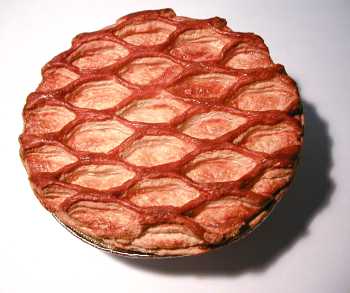
    Image from www.freeimages.co.uk

    Get a slice of the action... (Image from www.freeimages.co.uk)

    Everyone at Pi Day Live will be using marbles, pins, maps and other household items to discover pi using methods that range from 3500 to around 250 years old. It’s not all low-tech, though, as they will be using the web to gather everyone’s results live, combining them to find out if they can collectively calculate a more accurate approximation of pi. Will it be possible to derive pi to one, two, three or more, decimal places? Can we do better than the ancient Greeks or have we lost the ability to rediscover this amazing number without using computers?

    Mathematicians (and the American House of Representatives) have christened 14 March Pi Day because the date, when written in the US date format, is 3.14. Add the 1.59pm time of the Pi Day Live experiment and you get 3.14159, or pi at around the accuracy Archimedes calculated it over 2000 years ago using simple geometry.

    Pi has obsessed generations of mathematicians for millennia because it is integral to one of the most important and elegant geometric objects in nature, the circle. Attempting to calculate an accurate value for this never-ending transcendental number has been one of the big themes running throughout the history of mathematics.

    Even though you only need to know pi to 39 decimal places to calculate a circumference the size of the observable universe to the precision comparable to the size of a hydrogen atom, mathematicians have pushed the limits of computing technology to calculate the number to over one trillion digits. How close can Pi Day Live get to this accuracy using ancient techniques?

    You can connect with Marcus and Pi Day Live via an Online Lecture Theatre or by watching online on the ‘Big Screen’. If your computer can run YouTube videos then you have what you need to get involved. The event will be recorded and will be available on YouTube afterwards for anyone who can’t take part on the day. Just go to Pi Day Live website to find out more. And you can get live updates and all the pi facts you could ever want on Twitter at and Facebook.

    And you can read more about pi on Plus:

    • What is the area of a circle?
    • Number crunching ants
    • Transcendental meditation
    • Pi not a piece of cake
    • Log in or register to post comments
    University of Cambridge logo

    Plus is part of the family of activities in the Millennium Mathematics Project.
    Copyright © 1997 - 2025. University of Cambridge. All rights reserved.

    Terms