
Home
plus.maths.org

Secondary menu

  • My list
  • About Plus
  • Sponsors
  • Subscribe
  • Contact Us
  • Log in
  • Main navigation

  • Home
  • Articles
  • Collections
  • Podcasts
  • Maths in a minute
  • Puzzles
  • Videos
  • Topics and tags
  • For

    • cat icon
      Curiosity
    • newspaper icon
      Media
    • graduation icon
      Education
    • briefcase icon
      Policy

    Popular topics and tags

    Shapes

    • Geometry
    • Vectors and matrices
    • Topology
    • Networks and graph theory
    • Fractals

    Numbers

    • Number theory
    • Arithmetic
    • Prime numbers
    • Fermat's last theorem
    • Cryptography

    Computing and information

    • Quantum computing
    • Complexity
    • Information theory
    • Artificial intelligence and machine learning
    • Algorithm

    Data and probability

    • Statistics
    • Probability and uncertainty
    • Randomness

    Abstract structures

    • Symmetry
    • Algebra and group theory
    • Vectors and matrices

    Physics

    • Fluid dynamics
    • Quantum physics
    • General relativity, gravity and black holes
    • Entropy and thermodynamics
    • String theory and quantum gravity

    Arts, humanities and sport

    • History and philosophy of mathematics
    • Art and Music
    • Language
    • Sport

    Logic, proof and strategy

    • Logic
    • Proof
    • Game theory

    Calculus and analysis

    • Differential equations
    • Calculus

    Towards applications

    • Mathematical modelling
    • Dynamical systems and Chaos

    Applications

    • Medicine and health
    • Epidemiology
    • Biology
    • Economics and finance
    • Engineering and architecture
    • Weather forecasting
    • Climate change

    Understanding of mathematics

    • Public understanding of mathematics
    • Education

    Get your maths quickly

    • Maths in a minute

    Main menu

  • Home
  • Articles
  • Collections
  • Podcasts
  • Maths in a minute
  • Puzzles
  • Videos
  • Topics and tags
  • Audiences

    • cat icon
      Curiosity
    • newspaper icon
      Media
    • graduation icon
      Education
    • briefcase icon
      Policy

    Secondary menu

  • My list
  • About Plus
  • Sponsors
  • Subscribe
  • Contact Us
  • Log in
  • Come and meet mathematical women (and Plus) in Lancaster!

    22 March, 2013

    Want to meet some inspirational female mathematicians? Then come to the Florence Nightingale Day, a free day of activities, at Lancaster University on April 17. The day is aimed especially at girls in year 12 at schools in the Morecambe Bay and Preston areas but it is also open to boys. "Everyone talks about getting more women into mathematics but I wanted to do something to actively encourage it," says Nadia Mazza, a mathematics graduate from Lausanne University who is behind the idea. "Year 12 is a critical stage when students make crucial decisions affecting their future career plans. We want to show how appealing it can be to do maths."

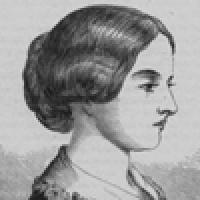
    Florence Nightingale

    A young Florence Nightingale

    Speakers at the morning session will include Professor June Barrow-Green from the Open University and pure mathematics researcher Professor Reidun Twarock, from the University of York. Opening the afternoon session will be first generation female mathematician Professor Dona Strauss from the University of Leeds. Then Beth Penrose (University of Nottingham), Fiona Murray (Principal Integrity Engineer – TA Pipelines and Structures at Centrica) and Suduph Imran (a former mathematics teacher at Our Lady's Catholic College in Lancaster who is studying for her Masters in Education) will speak about their jobs and how they use mathematics every day. Beth, Fiona and Suduph are ambassadors from STEMfirst, an organisation which promotes opportunities in science, technology, engineering and maths.

    The last speaker will be one of the Plus editors, having a look at the careers of some female mathematicians.

    The day will also include a hands-on mathematics contest when attendees will spend time solving tricky problems in small groups under the supervision of coaches, all PhD students from Lancaster University's Department of Mathematics and Statistics. Plus there will be displays featuring opportunities offered to women by a degree in mathematics or statistics, which will stimulate informal discussion between pupils and mathematicians.

    For more information and to book places please contact Nadia Mazza at n.mazza@lancaster.ac.uk or James Groves at j.groves@lancaster.ac.uk.

    The event is named after Florence Nightingale, best remembered for her work as a nurse during the Crimean War. This amazing woman had an immense love of both subjects and was a pioneer in statistics, especially in the use of visualisation of statistical data. You can find out more about her in this Plus article.

    • Log in or register to post comments
    University of Cambridge logo

    Plus is part of the family of activities in the Millennium Mathematics Project.
    Copyright © 1997 - 2025. University of Cambridge. All rights reserved.

    Terms