
Home
plus.maths.org

Secondary menu

  • My list
  • About Plus
  • Sponsors
  • Subscribe
  • Contact Us
  • Log in
  • Main navigation

  • Home
  • Articles
  • Collections
  • Podcasts
  • Maths in a minute
  • Puzzles
  • Videos
  • Topics and tags
  • For

    • cat icon
      Curiosity
    • newspaper icon
      Media
    • graduation icon
      Education
    • briefcase icon
      Policy

    Popular topics and tags

    Shapes

    • Geometry
    • Vectors and matrices
    • Topology
    • Networks and graph theory
    • Fractals

    Numbers

    • Number theory
    • Arithmetic
    • Prime numbers
    • Fermat's last theorem
    • Cryptography

    Computing and information

    • Quantum computing
    • Complexity
    • Information theory
    • Artificial intelligence and machine learning
    • Algorithm

    Data and probability

    • Statistics
    • Probability and uncertainty
    • Randomness

    Abstract structures

    • Symmetry
    • Algebra and group theory
    • Vectors and matrices

    Physics

    • Fluid dynamics
    • Quantum physics
    • General relativity, gravity and black holes
    • Entropy and thermodynamics
    • String theory and quantum gravity

    Arts, humanities and sport

    • History and philosophy of mathematics
    • Art and Music
    • Language
    • Sport

    Logic, proof and strategy

    • Logic
    • Proof
    • Game theory

    Calculus and analysis

    • Differential equations
    • Calculus

    Towards applications

    • Mathematical modelling
    • Dynamical systems and Chaos

    Applications

    • Medicine and health
    • Epidemiology
    • Biology
    • Economics and finance
    • Engineering and architecture
    • Weather forecasting
    • Climate change

    Understanding of mathematics

    • Public understanding of mathematics
    • Education

    Get your maths quickly

    • Maths in a minute

    Main menu

  • Home
  • Articles
  • Collections
  • Podcasts
  • Maths in a minute
  • Puzzles
  • Videos
  • Topics and tags
  • Audiences

    • cat icon
      Curiosity
    • newspaper icon
      Media
    • graduation icon
      Education
    • briefcase icon
      Policy

    Secondary menu

  • My list
  • About Plus
  • Sponsors
  • Subscribe
  • Contact Us
  • Log in
  • Find out why star crossed lovers take a chance

    29 January, 2014

    It might be grey and raining outside, but inside the Museum of London and Barnard's Inn Hall, Gresham College have some fascinating lectures planned to brighten the darkest day! First up Caroline Crawford will explore the lives of stars on Wednesday 5 February at 1pm at the Museum of London, how they are born, evolve over billions of years and dramatically burn, revealing clues to our own origins. It seems Hollywood isn't the only place where the stars crash and burn.
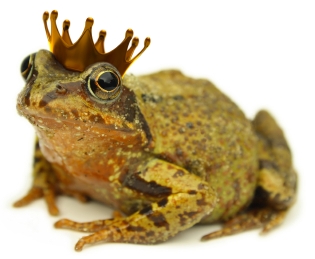
    Frog prince

    Prince Charming? Or just a slimy toad?

    And surely the best way to cheer up a dreary day is to fall in love. Tony Mann will explain the mechanics of computer dating and how maths can help us find our heart's desire (or at least a charming dinner companion) in Finding stable matches: the mathematics of computer dating on Monday 17 February at 6pm, at Barnard's Inn Hall.

    And if you are using a coin to decide whether to get out of bed or stay under the duvet, you need to hear what Raymond Flood has to say about Probability and its limits on Tuesday 18 February at 1pm at the Museum of London. He'll explain why we know a coin will come up heads roughly half the time over many tosses, but we can't tell you whether yours will land heads or tails tomorrow morning. If it lands heads and you make it to his lecture, you'll find out much more!

    There's no need to register for these free public events, just come a bit early to get a seat. You can find out about all the other fascinating talks on the Gresham College website and you can get in the mood by reading about astronomy, dating and probability on Plus.

    • Log in or register to post comments
    University of Cambridge logo

    Plus is part of the family of activities in the Millennium Mathematics Project.
    Copyright © 1997 - 2025. University of Cambridge. All rights reserved.

    Terms