
'The Math of Money'
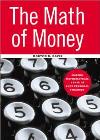
The Math of Money
by Morton D. Davis
Money is peculiar stuff. It has no use of any kind apart from its value in exchange for something else, and this grows over time as it earns interest, or shrinks as inflation overtakes it. If you have money to invest, there are a bewildering array of different kinds of financial instrument available: interest-bearing accounts, bonds, pension funds, stocks and shares, options ... If you want to borrow, mortgages and loans come in all shapes and sizes. To the layman, understanding how all these kinds of object work is something of a black art.
Or has been until now. Morton Davis's book is subtitled "Making Mathematical Sense of Your Personal Finances", but as he points out in the introduction, this is not a how-to book. Its focus is on understanding the structure of financial transactions and the principles that underlie them.
Each of the book's nine chapters takes a subject - "Interest" or "Statistics", for example - and trenchantly and readably demystifies it. Each chapter opens with a short quiz, designed to show that all of these subjects can be quite counter-intuitive at first blush. Davis returns to the examples in the quiz later in the chapter and gives a fuller explanation. Though the explanations are simple, they are not simplified, and indeed several examples are included that show how the wrong kind of simplification can lead to highly misleading results.
Davis claims he is writing for the general reader, and it is true that the exposition seldom requires more than the ability to add, subtract, multiply and divide. (There are occasional remarks addressed to more mathematical readers, but they can be easily skipped.) He does, however, expect his readers to be able to carry out these operations without much fear, and there are many examples. The examples, though, are carefully chosen to help the story along, not merely stuck in for the sake of it. And when he judges that the reader has had enough numbers for the time being, Davis inserts a lovely chapter on "The Psychology of Investing" with much good material but never a number in sight, and a fairly light-hearted one covering mixed strategies and auctions, before returning to the most serious businesses of statistics and options trading (readers of this issue of Plus who enjoyed the article on options will find the slightly more detailed account in this book especially interesting).
There is occasionally a little unevenness in exposition. Some of the chapter quizzes are hard to understand without having read the chapter already - I found the quiz in the chapter on "Bonds" particularly at fault here, realising when I reached the end of the chapter that I had not correctly understood any of the questions at the beginning, and the chapter as a whole is less clear than most. But by and large this is a clear and fascinating book, and anyone curious about the subject of money should read it.
- Book details:
- The Math of Money
- Morton D. Davis
- Hardcover, 199 pages (2001)
- Copernicus Books
- ISBN 0-387-95078-8