Home
plus.maths.org

Secondary menu

  • My list
  • About Plus
  • Sponsors
  • Subscribe
  • Contact Us
  • Log in
  • Main navigation

  • Home
  • Articles
  • Collections
  • Podcasts
  • Maths in a minute
  • Puzzles
  • Videos
  • Topics and tags
  • For

    • cat icon
      Curiosity
    • newspaper icon
      Media
    • graduation icon
      Education
    • briefcase icon
      Policy

    Popular topics and tags

    Shapes

    • Geometry
    • Vectors and matrices
    • Topology
    • Networks and graph theory
    • Fractals

    Numbers

    • Number theory
    • Arithmetic
    • Prime numbers
    • Fermat's last theorem
    • Cryptography

    Computing and information

    • Quantum computing
    • Complexity
    • Information theory
    • Artificial intelligence and machine learning
    • Algorithm

    Data and probability

    • Statistics
    • Probability and uncertainty
    • Randomness

    Abstract structures

    • Symmetry
    • Algebra and group theory
    • Vectors and matrices

    Physics

    • Fluid dynamics
    • Quantum physics
    • General relativity, gravity and black holes
    • Entropy and thermodynamics
    • String theory and quantum gravity

    Arts, humanities and sport

    • History and philosophy of mathematics
    • Art and Music
    • Language
    • Sport

    Logic, proof and strategy

    • Logic
    • Proof
    • Game theory

    Calculus and analysis

    • Differential equations
    • Calculus

    Towards applications

    • Mathematical modelling
    • Dynamical systems and Chaos

    Applications

    • Medicine and health
    • Epidemiology
    • Biology
    • Economics and finance
    • Engineering and architecture
    • Weather forecasting
    • Climate change

    Understanding of mathematics

    • Public understanding of mathematics
    • Education

    Get your maths quickly

    • Maths in a minute

    Main menu

  • Home
  • Articles
  • Collections
  • Podcasts
  • Maths in a minute
  • Puzzles
  • Videos
  • Topics and tags
  • Audiences

    • cat icon
      Curiosity
    • newspaper icon
      Media
    • graduation icon
      Education
    • briefcase icon
      Policy

    Secondary menu

  • My list
  • About Plus
  • Sponsors
  • Subscribe
  • Contact Us
  • Log in
  • News from the world of maths: Further evidence of Arctic melt-down

    16 March, 2010

    Tuesday, March 16, 2010

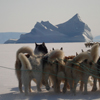
    The worrying decline of Arctic sea ice as a result of global warming is continuing. Last month the results of the Catlin Arctic Survey, an expedition to measure the thickness of Arctic sea ice, were presented at a press conference called by the World Wildlife Fund. On their 434km trek across the Arctic the explorers measured an average ice thickness of 1.77m. This confirms that the ice is getting thinner, but also means that they encountered mainly young ice, rather than the older and thicker multi-year ice they had expected.

    Read more...

    Labels: Latest news

    posted by Plus @ 10:56 AM 

    1 Comments:

    At 4:06 PM, Anonymous pyrrho said...

    "There now is no doubt in the scientific community that the Arctic ice cap is melting, and that this is due to man-made global warming."This is nonsense.Man-made global warming is a theory which is increasingly at variance with the facts;there has been no statistically significant global warming for at least a decade. There is no consensus and just repeating a statement does not make it true.

    "The Arctic Ocean covers 5,427,000 square miles. Catlin 2010 has seen maybe ten square miles of it, meaning they have sampled less than 0.0002% of the ice. They also choose to travel on refrozen leads because they are flatter and smoother, so their sampling is not random. No serious scientist would attempt to draw any conclusions about the quality of the ice based on a cherry picked sample representing less than 0.0002% of the Arctic" Taken from Watts up With That to provide some balance.

     
    • Log in or register to post comments
    University of Cambridge logo

    Plus is part of the family of activities in the Millennium Mathematics Project.
    Copyright © 1997 - 2025. University of Cambridge. All rights reserved.

    Terms