Home
plus.maths.org

Secondary menu

  • My list
  • About Plus
  • Sponsors
  • Subscribe
  • Contact Us
  • Log in
  • Main navigation

  • Home
  • Articles
  • Collections
  • Podcasts
  • Maths in a minute
  • Puzzles
  • Videos
  • Topics and tags
  • For

    • cat icon
      Curiosity
    • newspaper icon
      Media
    • graduation icon
      Education
    • briefcase icon
      Policy

    Popular topics and tags

    Shapes

    • Geometry
    • Vectors and matrices
    • Topology
    • Networks and graph theory
    • Fractals

    Numbers

    • Number theory
    • Arithmetic
    • Prime numbers
    • Fermat's last theorem
    • Cryptography

    Computing and information

    • Quantum computing
    • Complexity
    • Information theory
    • Artificial intelligence and machine learning
    • Algorithm

    Data and probability

    • Statistics
    • Probability and uncertainty
    • Randomness

    Abstract structures

    • Symmetry
    • Algebra and group theory
    • Vectors and matrices

    Physics

    • Fluid dynamics
    • Quantum physics
    • General relativity, gravity and black holes
    • Entropy and thermodynamics
    • String theory and quantum gravity

    Arts, humanities and sport

    • History and philosophy of mathematics
    • Art and Music
    • Language
    • Sport

    Logic, proof and strategy

    • Logic
    • Proof
    • Game theory

    Calculus and analysis

    • Differential equations
    • Calculus

    Towards applications

    • Mathematical modelling
    • Dynamical systems and Chaos

    Applications

    • Medicine and health
    • Epidemiology
    • Biology
    • Economics and finance
    • Engineering and architecture
    • Weather forecasting
    • Climate change

    Understanding of mathematics

    • Public understanding of mathematics
    • Education

    Get your maths quickly

    • Maths in a minute

    Main menu

  • Home
  • Articles
  • Collections
  • Podcasts
  • Maths in a minute
  • Puzzles
  • Videos
  • Topics and tags
  • Audiences

    • cat icon
      Curiosity
    • newspaper icon
      Media
    • graduation icon
      Education
    • briefcase icon
      Policy

    Secondary menu

  • My list
  • About Plus
  • Sponsors
  • Subscribe
  • Contact Us
  • Log in
  • News from the world of maths: Unintended consequences of mathematics

    10 February, 2010
    Wednesday, February 10, 2010

    Unintended consequences of mathematics

    Mathematicians (and Plus authors) John Barrow, Colva Roney-Dougal and Marcus du Sautoy will be discussing unintended consequences in mathematics with Melvyn Bragg on his BBC Radio 4 programme In Our Time tomorrow morning at 9am.
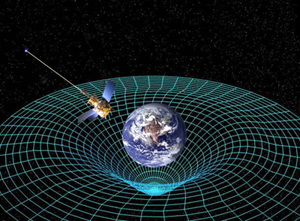
    Image courtesy NASA

    Many of the most exciting developments in science is is when knowledge from one area such as pure mathematics unexpectedly crosses boundaries to provide deeper understanding of a previously unconnected problem in another area. The programme will explore many such unintended consequences, including how the ancient purely geometric study of conic sections turned out to be vital in understanding the orbits of the planets, how Einstein used the theoretical concepts from non-Euclidean geometry for his groundbreaking work on special relativity, and how the number theory provided the security necessary for our digital age.

    You can read more from John, Colva and Marcus on Plus, as well as articles on conic sections and planetary orbits, non-euclidean geometry and special relativity, and number theory and chryptography.

    posted by Rachel @ 2:09 PM

    1 Comments:

    At 8:02 PM, Blogger David said...

    I thought this show was brilliant, and I would like to listen again wish my son who is studying maths A Level. This show really made mathematics come alive.

     
    • Log in or register to post comments
    University of Cambridge logo

    Plus is part of the family of activities in the Millennium Mathematics Project.
    Copyright © 1997 - 2025. University of Cambridge. All rights reserved.

    Terms