
Home
plus.maths.org

Secondary menu

  • My list
  • About Plus
  • Sponsors
  • Subscribe
  • Contact Us
  • Log in
  • Main navigation

  • Home
  • Articles
  • Collections
  • Podcasts
  • Maths in a minute
  • Puzzles
  • Videos
  • Topics and tags
  • For

    • cat icon
      Curiosity
    • newspaper icon
      Media
    • graduation icon
      Education
    • briefcase icon
      Policy

    Popular topics and tags

    Shapes

    • Geometry
    • Vectors and matrices
    • Topology
    • Networks and graph theory
    • Fractals

    Numbers

    • Number theory
    • Arithmetic
    • Prime numbers
    • Fermat's last theorem
    • Cryptography

    Computing and information

    • Quantum computing
    • Complexity
    • Information theory
    • Artificial intelligence and machine learning
    • Algorithm

    Data and probability

    • Statistics
    • Probability and uncertainty
    • Randomness

    Abstract structures

    • Symmetry
    • Algebra and group theory
    • Vectors and matrices

    Physics

    • Fluid dynamics
    • Quantum physics
    • General relativity, gravity and black holes
    • Entropy and thermodynamics
    • String theory and quantum gravity

    Arts, humanities and sport

    • History and philosophy of mathematics
    • Art and Music
    • Language
    • Sport

    Logic, proof and strategy

    • Logic
    • Proof
    • Game theory

    Calculus and analysis

    • Differential equations
    • Calculus

    Towards applications

    • Mathematical modelling
    • Dynamical systems and Chaos

    Applications

    • Medicine and health
    • Epidemiology
    • Biology
    • Economics and finance
    • Engineering and architecture
    • Weather forecasting
    • Climate change

    Understanding of mathematics

    • Public understanding of mathematics
    • Education

    Get your maths quickly

    • Maths in a minute

    Main menu

  • Home
  • Articles
  • Collections
  • Podcasts
  • Maths in a minute
  • Puzzles
  • Videos
  • Topics and tags
  • Audiences

    • cat icon
      Curiosity
    • newspaper icon
      Media
    • graduation icon
      Education
    • briefcase icon
      Policy

    Secondary menu

  • My list
  • About Plus
  • Sponsors
  • Subscribe
  • Contact Us
  • Log in
  • String theory and art in Cambridge
    29 February, 2012
    RT and MF at the aquarium

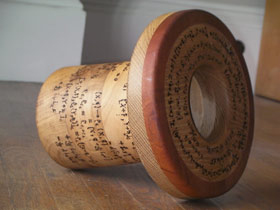
    Interested in the connections between art and science? Then come to this free public lecture at the Isaac Newton Institute in Cambridge on March 14, 2012 to hear theoretical physicist David Berman and artist Grenville Davey talk about string theory as an inspiration to art.

    String theory is at the cutting edge of theoretical physics. Its deep goal is to unify quantum mechanics and relativity. In doing so, string theory brings up new ways of seeing the world, with hidden dimensions and novel surprising symmetries and relationships. This event will begin with an accessible introduction to string theory by David Berman followed by a presentation and discussion with Grenville Davey on his art and how aspects of string theory and contemporary physics have been an inspiration. A wine reception will follow.

    Grenville Davey is a Turner Prize winning sculptor who is currently artist-in-residence at the Institute. His recent interests and work have been inspired by the ideas from string theory and its way of describing our universe. David Berman is currently organising a programme at the Institute on string theory and is an expert in M-theory, an extension of string theory.

    To request free tickets to this event please contact the Isaac Newton Institute by phoning +44 (0)1223 335999 or emailing reception@newton.ac.uk. Some tickets will also be available on the night but pre-booking is recommended. This event is likely to be suitable for interested people age 14+. It starts at 6.30pm and lasts for an hour.

    For further information see the Newton Institute website.

    • Log in or register to post comments
    University of Cambridge logo

    Plus is part of the family of activities in the Millennium Mathematics Project.
    Copyright © 1997 - 2025. University of Cambridge. All rights reserved.

    Terms