'The Tyranny of Numbers'
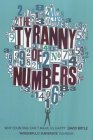
The Tyranny of Numbers - Why Counting Can't Make Us Happy
The author says in the introduction that "this book is intended as a polemic", and a polemic it certainly is. Whether or not you like the book will therefore depend not only on whether you agree with his thesis, but also on whether or not you like polemic.
Boyle's thesis is that the bottom line is the only measure used in our society, and that if something can't be counted, we ignore it. He points out, not unreasonably, that mere counting is reductionist, and that when we count a lot of information is lost.
Although there are occasional disclaimers, along the lines of "counting is vital as long as we remember its limitations" the author's heart is not in them, as he tells us in the final pages.
"[In future] we could try measuring more and we could try measuring less...Measuring more is the trendy radical solution, but my heart is probably in the opposite...When we count less and get it wrong, we risk inefficiency, bigotry, ignorance and disaster. But when we count less and get it right, we probably get closer to joy and humanity than we can any other way."To my mind, the whole problem with the author's thesis is in those few little words "and get it right". If you get it right, it's unlikely to matter what approach you have taken. The point is to have safeguards against getting it wrong, and nothing in this book convinces me that such safeguards are available to those who count less.
A considerable amount of the book is devoted to setting up straw men ready to be knocked down. It's not human nature to "be happy", and if you pretend that your opponents think they can make people universally and infallibly happy, you will certainly be able to contradict them.
Partly because of the amount of historical material, "counting" - as in the bad thing to do - is usually done by those in authority to the masses. No mention is made of the more subversive uses of counting - by the masses to contradict authority. Just one example of this sort, completely ignored by the author: counting empowers patients' groups, providing them with the necessary evidence to challenge the previously unquestioned authority of doctors, and ensure the best possible treatment for themselves.
Without counting, all that is left is assertion. And to give the author credit, he doesn't wish to rely entirely on assertion - which means that he is caught in the paradox that it is necessary to count in order to prove the futility of counting.
The poet Ogden Nash once said
"Certainly there are lots of things in life that money won't buy, but it's very funny -
Have you ever tried to buy them without money?"
Similarly, there are things that can't be measured by counting - but the author certainly hasn't convinced me that he can do any better without counting.
- Book details:
- The Tyranny of Numbers - Why Counting Can't Make Us Happy
- David Boyle
- hardback - 236 pages (2000)
- HarperCollins
- ISBN 0-00-257157-9
- Paperback - 256 pages ( new edition, 3 December, 2001)
- Flamingo
- ISBN: 0006531997