Plus.Maths.org
logic
Find out about these important results that destroyed a mathematical dream.
How would you explain the natural numbers to an alien devoid of a number instinct? You could try Peano arithmetic...
In some sense, all of maths should come under the label "logic", and in this collection of articles we try to explain why.
If you can prove that a statement can't possibly be false, does this mean it's true?

The story of George Boole is an extraordinary example of collaboration across the centuries.
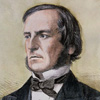
Modern computers wouldn't be possible without George Boole, who died before light bulbs even came on the market. We celebrate his 200th birthday with a look at the man and his work.
What are mathematical proofs, why do we need them and what can they say about sheep?
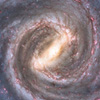
On the face of it the Universe is a fairly complex place. But could mathematics ultimately lead to a simple description of it? In fact, should simplicity be a defining feature of a "theory of everything"? We ponder the answers.
Paraconsistent mathematics is a type of mathematics in which contradictions may be true.
In such a system it is perfectly possible for a statement A and its negation not A to both be true. How can this be, and be coherent? What does it all mean?
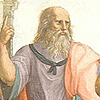
We all take for granted that mathematics can be used to describe the world, but when you think about it this fact is rather stunning. This article explores what the applicability of maths says about the various branches of mathematical philosophy.
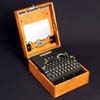
Almost nothing tangible remains of the legendary Bletchley Park codebreaker Alan Turing. So when an extremely rare collection of papers relating to his life and work was set to go to auction last year, an ambitious campaign was launched to raise funds to purchase them for the Bletchley Park Trust and its Museum. The Trust has announced today that the collection has been saved for the nation as the National Heritage Memorial Fund (NHMF) has stepped in quickly to provide £213,437, the final piece of funding required.