Plus.Maths.org

Articles
Modelling shows that old and vulnerable people should be prioritised.
Like any medical drug, vaccines are tested in large-scale randomised controlled trials.
The efficacy of vaccines is estimated from trials, using statistical techniques.

Because the vaccine may not stop transmission of the virus.
Yes the approved vaccines are safe. If you balance the risks, then taking the vaccine is much safer than taking your chances with COVID-19.
We are all longing to go into a lower tier, but this can come at a high price later on.
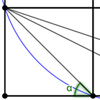
Don't like trigonometry? Don't worry, here are three beautiful proofs of a well-known result that make do without it.
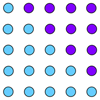
Triangular numbers: find out what they are and why they are beautiful!

One of the most famous experiments in physics demonstrates the strange nature of the quantum world.
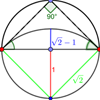
A beautiful geometric problem opens the door to the world of metallic numbers.

New research shows that ventilation is crucial and that masks are effective.

Holly Krieger has won a Whitehead Prize for work that combines number theory and dynamical systems.