Plus.Maths.org

neuroscience
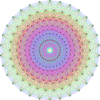
Is maths beautiful? New research into the workings of our brains suggests that it is.

Most of us have a rough
idea that computers are
made up of complicated hardware and software. But perhaps few of us
know that the concept of a computer was envisioned long before these
machines became ubiquitous items in our homes, offices and even
pockets.
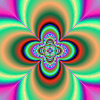
Geometric hallucinations are very common: people get them after taking drugs, following sensory deprivation, or even after rubbing their eyes. What can they tell us about how our brain works?

Are number, space and time features of the outside world or a result of the brain circuitry we have developed to live in it? Some interesting parallels between modern neuroscience and the mathematics of 19th century mathematician Bernard Riemann.
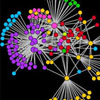
We like to think of the human brain as special, but as we reported on Plus last year, it has quite a lot in common with worm brains and even with high-performance information processing systems. But how does it compare to online social networks? In a recent lecture the psychiatrist Ed Bullmore put this question to the test.
The human brain faces a
difficult trade-off. On the one hand it needs to be complex to ensure high performance, and on the other it needs to minimise "wiring cost" — the sum of the length of all the connections —
because communication over distance takes a lot of energy. It's a problem well-known to computer scientists. And it seems that market driven human invention and natural selection have come up with similar solutions.