
Do you know what's good for you?
What should we do in the face of a pandemic? Should life-saving drugs be withheld because they're too expensive? Should the government ban alcohol? And are bacon sandwiches really that dangerous?

Plus has answered these and many other questions as part of a project, supported by the Wellcome Trust, looking at the role of mathematics and statistics in the biomedical sciences. We bring you in-depth articles, podcasts, classroom activities, and the chance to debate the issues.
So, do you know what's good for you? To help you find out, we've brought together all the content of this project, grouped together in the following categories:
- The maths of infectious diseases: From SARS to swine flu, infectious diseases hardly ever disappear from the headlines. If it's not the disease itself that hits the news, then it's the vaccines with their potential side effects. This category contains news items, in-depth articles, podcasts, and class room activities on the maths of epidemiology.
- Evidence based medicine: Which treatments and drugs should be offered on the NHS, given the finite health care budget? How do you judge the risks of medical treatments, or even your own behaviour? The articles in this category explain what sort of evidence is used to answer these difficult questions.
- Genetics: One of the greatest advances in the biomedical sciences has been the unravelling of our genetic code. The articles in this category explore and explain the mathematical challenges posed by genes.
- Maths in medical research: Mathematics has become an indispensible tool in medical research, not only because it can crack many difficult problems, but also because it can be used to model complex organisms. These articles explore how.
Infectious diseases
How can maths fight a pandemic? — How do mathematical models of COVID-19 work and should we believe them? We talk to an epidemiologist, who has been working flat out to inform the government, to find out more.
Squashing the curve — A study into Covid-19 suggests that flattening the curve will take longer and harder measures was hoped at first.
Fighting the coronavirus — A brief and accessible introduction to epidemiological modelling.
A very useful pandemic — In 2018 Cambridge researchers, the BBC, and thousands of citizen scientists created a revolutionary infectious disease data set.
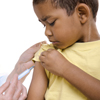
Protecting the nation — Vaccination is an emotive business. The furore around the MMR vaccine and autism has shown that vaccination health scares can cause considerable damage: stop vaccinating, and epidemics are sure to follow. But how do scientists decide whether a vaccine and a vaccination strategy are effective and safe? (This article is accompanied by a podcast.)

Protecting the nation: the podcast — We talk to Paddy Farrington, Professor of Statistics at the Open University, about issues surrounding vaccination safety.

Influenza virus: It's all in the packaging — We have all become more aware of the dangers of influenza this year, but why is it so dangerous? Julia Gog explains that the unusual structure of the influenza genome can lead to dangerous evolutionary jumps, and how mathematics is helping to understand how the virus replicates.
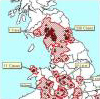
The mathematics of diseases — Over the past one hundred years, mathematics has been used to understand and predict the spread of diseases, relating important public-health questions to basic infection parameters. Matthew Keeling describes some of the mathematical developments that have improved our understanding and predictive ability.

London, September, 1853. A cholera outbreak has decimated Soho, killing 10% of the population and wiping out entire families in days. Current medical theories assert that the disease is spread by "bad air" emanating from the stinking open sewers. But one physician, John Snow, has a different theory: that cholera is spread through contaminated water. And he is just about to use mathematics to prove that he is right. Read more...

Swine flu uncertainty — When a new infectious disease has broken out, how do you get those vital first estimates on numbers of infected and dead? This article, a news item from July 2009, looks at monitoring systems.

Pan(dem)ic? — Swine flu has turned out to be much milder than was feared at first, leading to accusations of initial hype levelled at the government and scientists. But even at the start of the outbreak, scientists were accused at scare mongering. This article, a news item from May 2009, explains how predictions about the spread of the infection are made.

Don't blame it on the tube — Buses may be safer than babies, at least when it comes to swine flu. This news story from October 2009 examines the preliminary results from an online flu survey, which suggest that contact with children poses one of the greatest swine flu risk factors, while the use of public transport seems surprisingly safe.
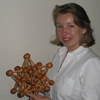
A symmetry approach to viruses — How mathematical descriptions of symmetry, group theory and geometry have led to amazing discoveries regarding the shape of viruses. This article is accompanied by a podcast.
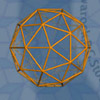
A symmetry approach to viruses: the podcast — An interview with a scientist working on the geometry of viruses.
Beating bird flu with bills — Travelling bank notes mimic the spread of diseases.
School students deliver cutting edge research — Find out how a group of school students-turned-researchers delivered new data that will help scientists stem the spread of infectious diseases.
Classroom activity: Build your own disease — This activity explores epidemiological models using basic probability theory. It also involves exponential growth and geometric progressions.
Evidence based medicine

What is pharmaceutical statistics? — What do statisticians do in the pharmaceutical industry?

Evaluating a medical treatment - how do you know it works? — New treatments and drugs are tested extensively before they come on the market. But how do you make sure that no dangerous side effects are missed in the trials, and that any positive effect you observe is really due to the drug, rather than just chance or some other type of bias that has crept in? (This article is accompanied by a podcast.)

Evaluating a medical treatment: The podcast — We talk to David Spiegelhalter (Winton Professor of the Public Understanding of Risk), Sheila Bird (Professor at the Medical Research Council Biostatistics Unit), and Nigel Hawkes (journalist and director of Straight Statistics) about why randomised controlled trials are used and how they test if a new treatment works.
Biostatistics, from cradle to grave: The podcast — It's not just medical drugs that need rigorous testing. Public health programmes, too, need to be assessed before they are implemented, and government health policy should also be based on objective evidence. We talk to Professor Sheila Bird of the Biostatistics Unit in Cambridge about her work in public health and its impact on policy, and discuss bias in pharmaceutical studies.

The economics of health —With a finite health care budget, health authorities have to strike a difficult balance: every decision to fund a treatment for one patient group may come at the expense of others. So how are these difficult decisions made?

How to measure life — A new drugs offers hope to cancer sufferers and may add years to their lives. However NICE, the National Institute for Health and Clinical Excellence, must decide if it can be prescribed freely on the NHS. This news story from June 2009 explains the mathematical considerations that go into NICE's decision, and why such a decision must be made.

Breast screening, a statistical controversy — One in nine women will get breast cancer in her lifetime, and it seems sensible to screen women for breast cancer to treat them as early as possible. But, as this article explains, the statistical evidence isn't all that clear-cut.

Florence Nightingale: The compassionate statistician — Florence Nightingale survives in our imaginations as an inspired nurse. But the "lady with the lamp" was also a pioneering and passionate statistician. She understood the influential role of statistics and used them to support her convictions. So to commemorate her on the centenary of her death, we'll have a look at her life and work as a statistician.Read more...

2845 ways of spinning risk — Do bacon sandwiches give you cancer? Statistical analysis can give you an idea of whether they do or not, but, as this article explains, public reaction to the results depends on how the risks are spun by the media.
Protecting the nation — Vaccination is an emotive business. The furore around the MMR vaccine and autism has shown that vaccination health scares can cause considerable damage: stop vaccinating, and epidemics are sure to follow. But how do scientists decide whether a vaccine and a vaccination strategy are effective and safe? (This article is accompanied by a podcast.)
Protecting the nation: the podcast — We talk to Paddy Farrington, Professor of Statistics at the Open University, about issues surrounding vaccination safety.

Small but lethal — Comparing and communicating small lethal risks is a tricky business, yet this is what many of us are faced with in our daily lives. One way of measuring these risks is to use a quantity called the micromort. Read more...

Classroom activity: What's the best medicine — This activity explores the difficult decisions facing health authorities when deciding which drugs should be funded, and explores how maths is used to decide which treatments provide the most "health for money". It involves basic arithmetic and manipulation of averages.

Career interview: medical statistician — Medical statistician Robert Hemmings explains how his work for the Medicines Control Agency helps to safeguard the health of the nation.
Reporting risk
It can be very difficult to understand health risks, particularly when they are badly reported (intentionally or not) in the media. These short articles highlight the pitfalls of reporting risk statistics.
- Bizarre conclusion from alcohol study (January 2018)
- We're doomed, say scientists (February 2009)
- The agony and ecstasy of risk statistics (February 2009)
- Shine a light on dodgy stats (January 2009)
- You aren't what your mother eats (January 2009)
Genetics

Solving the genome puzzle — The human genome is represented by a sequence of 3 billion As, Cs, Gs, and Ts. With such large numbers, sequencing the entire genome of a complex organism isn't just a challenge in biochemistry. It's a logistical nightmare, which can only be solved with clever algorithms.

"It's a match!" — cries the CSI. At first glance it might seem that if the police have matched a suspect's DNA to evidence from the crime scene, then the case is closed. But some statistical thinking is required to understand exactly what a match is, and importantly, how juries should assess this as part of the evidence in a trial.
Modelling cell suicide — Shedding light on suicidal cells and a mathematical model that could help fight cancer.

Classroom activity: matching criminals — This activity explores pitfalls surrounding DNA data bases.
You're more than the sum of your genes — geneticists are usually concerned with picking apart the individual genes that make up a genome, but two biochemical engineers from the University of Wisconsin Madison have decided to re-assemble all the pieces and give them a good shake. This news story from February 2009 explains that it's not just the genes themselves, but also the way in which they are organised within the genome, that determine the characteristics of an organism.
Influenza virus: It's all in the packaging — We have all become more aware of the dangers of influenza this year, but why is it so dangerous? Julia Gog explains that the unusual structure of the influenza genome can lead to dangerous evolutionary jumps, and how mathematics is helping to understand how the virus replicates.

Of pancakes, mice and men — Genes normally evolve by tiny mutations, but every now and then something more radical occurs and entire genes along a chromosome get flipped. Understanding gene flipping boils down to solving a problem from pure maths. Colva Roney-Dougal and Vincent Vatter explain, taking us on a journey from waiters sorting pancakes, via one of the richest men in the world, to the genetic similarities of mice and humans.

Career interview: Scientific data analyst, life science technology — Genomics is one of the fastest moving areas of science and Gavin Harper, a mathematician and statistician, has put himself right at its centre. He works for Oxford Nanopore Technologies, a company which is developing new technology for analysing molecules and sequencing DNA. With 75 employees from 18 different countries and all sorts of scientific backgrounds, Gavin's work environment is nothing like the solitary paper-and-pencil affair traditionally associated with mathematics.
Reconstructing the tree of life — Last year saw the 150th anniversary of the publication of On the origin of species, and the 200th anniversary of the birth of its author, Charles Darwin. At the heart of Darwin's theory of evolution lies a beautifully simple mathematical object: the evolutionary tree. In this article we look at how maths is used to reconstruct and understand it. Read more...

Natural selection, maths and milk—According to Darwin, natural selection is the driving force of evolution. It's a beautifully simple idea, but given the thousands of years that are involved, nobody has ever seen it in action. So how can we tell whether or not natural selection occurs and which of our traits are a result of it? In this article Charlotte Mulcare uses milk to show how maths and stats can provide genetic answers. Read more...

Clever coiling — Something about nature loves a helix, the ubiquitous spiral shape taken on by DNA and many other molecules found in the cells of living creatures. This news story from March 2005 explains how physicists may have a mathematical answer to why this shape is so common in nature. Read more...
Seeking truth with statistics — As if deciding on guilt or innocence wasn't a big enough burden for juries, many now also have to struggle with complex scientific evidence. It is vital that the statistical arguments involved are presented in a meaningful way. This article, a news story from June 2004, reports on a meeting of the Royal Statistical Society's General Applications Section that was tackling this difficult task. Read more...
We have depended on knots for thousands of years to hold things together. In the 1800's the mathematical theory of knots was born out of attempts to model the atom. This article from 2001 explores knot theory, and the role it plays in knotting and unknotting DNA molecules. Read more...
All chemical reactions are probabilistic, including those acting on the information stored in the DNA inside our cells. This news story from February 2004 reports on a mathematical model that simplifies the problem of noise in monitoring molecular reactions like those involved in the expression of genes. Read more...
Medical research — maths to make you feel better
Speaking maths — We often think of mathematics as a language, but does our brain process mathematical structures in the same way as it processes language? A recent study suggests that it does: the process of storing and reusing syntax "works across cognitive domains." Read more...
Feeling tense about healing wounds?
— Squeamish about cuts and scrapes? Maths can help you feel better.
Read more...
Born to count? — People as well as animals are born with a sense for numbers. But is this inborn number sense related to mathematical ability? A new study suggests that it is. Read more...
Shaping our bones — We know that applying a force to a bone during its development can influence its growth and shape. But can we use our understanding of how developing bone reacts to mechanical forces to help people suffering from diseases that lead to bone deformities? Read more...

Stretch, but without the wrinkles — A team of nanoengineers have constructed new materials that don't wrinkle when you stretch them. This makes them similar to tissue found in the human body, so they may in the future be used to repair damaged heart walls, blood vessels and skin. Read more...

Struggling with your maths? — If you are, then you may be one of the 5 to 7% of the population suffering from dyscalculia, the mathematical equivalent of dyslexia. But unlike many dyslexia sufferers, you probably haven't received the help you need to cope with your condition. As a recent article published in the journal Science points out, dyscalculia is the "poor relation" of dyslexia. Read more...
Biology's next microscope, mathematics' next physics — It is thought that the next great advances in biology and medicine will be discovered with mathematics. As biology stands on the brink of becoming a theoretical science Thomas Fink asks if there is more to this collaboration than maths acting as biology's newest microscope? Will theoretical biology lead to new and exciting maths just as theoretical physics did in the last two centuries. And is there a mathematically elegant story behind life? Read more...
Wiring up brains — The human brain faces a difficult trade-off. On the one hand it needs to be complex to ensure high performance. On the other hand it needs to minimise what you might call wiring cost — the sum of the length of all the connections — because communication over distance is metabolically expensive. It's a problem well-known to computer scientists. And it seems that market-driven human invention and natural selection, faced with similar challenges, have come up with similar solutions.
Read more...
You can also listen to our podcast exploring complexity in the brain.
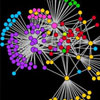
Neuro-tweets: #hashtagging the brain — The human brain faces a difficult trade-off. On the one hand it needs to be complex to ensure high performance. On the other hand it needs to minimise what you might call wiring cost — the sum of the length of all the connections — because communication over distance is metabolically expensive. It's a problem well-known to computer scientists. And it seems that market-driven human invention and natural selection, faced with similar challenges, have come up with similar solutions. Read more...

Eat, drink and be merry: making it go down well — When you swallow an aspirin or some yummy nutritious food, how can you be sure that the beneficial components are absorbed by your gut, rather than "shooting straight out"? This article dives into the rather smelly business of digesting food and how an application of chaos theory shows the best way to digest a medicinal drug. Read more...

Eat, drink and be merry: making sure it's safe — Food that's not been cooked properly poses a major threat to public health: if it doesn't go up to 100 degrees, some bugs will survive. This article looks at some clever maths used to design microwave ovens for maximum safety. Read more...
Modelling cell suicide — Shedding light on suicidal cells and a mathematical model that could help fight cancer. Read more...

Creating a virtual cancer — Cancer is one of the major causes of death in the world (particularly the developed world), with around 11 million people diagnosed and around 7 million people dying each year. The World Health Organisation predicts that current trends show around 9 million will die in 2015, with the number rising to 11.5 million in 2030. This news story from October 2009 reports on the work of mathematician Mark Chaplain and an interdisciplinary team at the University of Dundee to develop a virtual model of cancer growth and spread. .

Kelvin's bubble burst again — The Kelvin problem, posed by Lord Kelvin in 1887, is to find an arrangement of cells, or bubbles, of equal volume, so that the surface area of the walls between them is as small as possible - in other words, to find the most efficient soap bubble foam. A researcher from the University of Bath has tackled this old geometric problem with a new method, and this news story from September 2009 explains that this may lead to advances in creating hip replacements and replacement bone tissue for bone cancer patients. Read more...

Controlling cockroach chaos — Catching sight of a cockroach tends to make us behave chaotically, what with the running and screaming and throwing of shoes. But it appears that chaos might actually explain how we, and the cockroach itself, behave. An interdisciplinary team of scientists from Germany have created a robotic cockroach that autonomously behaves in a way reminiscent of a real cockraoch. Recreating lifelike behaviour is not new, but this robot reproduces a huge range of behaviours and quickly reacts to new situations and switches between them. And the secret to its success is controlled chaos in its robotic brain. Read more...

Uncoiling the spiral: Maths and hallucinations — Think drug-induced hallucinations, and the whirly, spirally, tunnel-vision-like patterns of psychedelic imagery immediately spring to mind. But it's not just hallucinogenic drugs that conjure up these geometric structures. People have reported seeing them in near-death experiences, following sensory deprivation, or even just after applying pressure to the eyeballs. So what can these patterns tell us about the structure of our brains? Read more...

Baby robots feel the love — Researchers have for the first time created robots that can develop and express emotions. They are capable of expressing anger, fear, sadness, happiness, excitement and pride and will demonstrate very visible distress if you fail to give them comfort when they need it. And they can even display different personality traits. Read more...

Through the looking-glass — Some molecules - thalidomide, for example - come in both left and right handed versions, while others are indistinguishable from their reflections. We find out about the role of mathematical symmetry in chemistry. Read more...

Chaos in the brain — Saying that someone is a chaotic thinker might seem like an insult, but, aas this article shows, it could be that the mathematical phenomenon of chaos is a crucial part of what makes our brains work. Read more...

Trust me, I've evolved — Why are some people generous and others selfish? There's no doubt that both strategies pay off under certain circumstances, but research (as well as everyday experience) shows that we are not mere opportunists — some people simply are nicer than others. This raises a question which intrigues evolutionary psychologists: is there a selective force that works in favour of a wide range of personalities, preventing us from all evolving the same optimal character trait? Read more...
Saving lives: the mathematics of tomography — Not so long ago, if you had a medical complaint, doctors had to open you up to see what it was. These days they have a range of sophisticated imaging techniques at their disposal, saving you the risk and pain of an operation. This article looks at the maths that isn't only responsible for these medical techniques, but also for much of the digital revolution.Read more...

Classroom activity: the game of life — One of the amazing things about life is its sheer complexity. How can a bunch of mindless cells combine to form something as complex as the human brain, or as delicate, beautiful and highly organised as the patterns on a butterfly's wing? Maths has some surprising answers you can explore yourself with this interactive activity. Explore the game of life...

Anonymous
It is a reasonable first attempt. We do need better. Medicine pays too little attention to measuring patients' distress. They measure disease processes to a minute and precise degree but largely ignore quantification of illness, distress, disability. These are not new insights. Patients need the opportunity at every consultation to describe their quality of life and these sequential data need to be displayed graphically to the clinicians as a normal part of healthcare records. With the internet for remote access and touchscreen technology in healthcare settings this should be easy to implement. Only then can the assembled data be used to construct a more reliable qaly. It will come.