Plus.Maths.org

quantum mechanics

Everyone knows what time is. We can practically feel it ticking away,
marching on in the same direction with horrifying regularity. Time has
enslaved the Western world and become our most precious commodity. Turn it
over to the physicists however, and it begins to
morph, twist and even crumble away. So what is
time exactly?

This podcast featuring Paul Davies, a theoretical physicist and cosmologist at Arizona State University and Director of BEYOND: Centre for Fundamental Concepts in Science, explores this difficult question and accompanies our What is time article.

Quantum computing often grabs the headlines. The word "quantum" itself is intriguing enough, but what exactly is quantum computing?
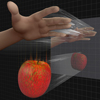
Over the last few decades physicists have been developing a curious idea. Perhaps the world we inhabit is a hologram, lacking a crucial feature of the world as we perceive it: the third dimension.

To mark international cat day, here's a quick look at the most famous cat in the history of science: Schrödinger's cat.

Find out how some species of birds use quantum mechanics to navigate and studying how they do it might actually help us with building quantum computers.

Are you fascinated by the double slit experiment? Then hold on to your hat for Wheeler's delayed choice experiment.
A possible way of resolving the greatest problem of physics.

Explore the biggest problem in modern physics.
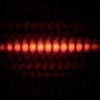
One of the most famous experiments in physics demonstrates the strange nature of the quantum world.

Untangling how the human perception of cause-and-effect might arise from quantum physics may help us understand the limits and potential of AI.