







game theory
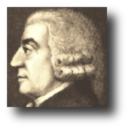
Adam Smith is often thought of as the father of modern economics. In his book "An Inquiry into the Nature and Causes of the Wealth of Nations" Smith decribed the "invisible hand" mechanism by which he felt economic society operated. Modern game theory has much to add to Smith's description.

In 1997 Garry Kasparov, then World Champion, lost an entire chess match to the IBM supercomputer Deep Blue, and it is only a matter of time before the machines become absolutely unbeatable. But the human brain, as Lewis Dartnell explains, is still able to put up a good fight by exploiting computers' weaknesses.
Jet engines, aircraft carriers and telecommunications networks — these are just some of the things that Nira Chamberlain has modelled. And while he's figuring out defence logistics, he's also pursuing a pure mathematical interest in games. Find out what mathematical modelling can do and why it can also make you slim and fluent in French.

José-Manuel Rey revisits a scene of the film A beautiful Mind.

José-Manuel Rey unveils the curse of attractiveness
Two game theorists share prize for their analyses of conflict and cooperation

Mathematicians in search of romantic success

Game theorists model the evolution of trust and trustworthiness