








computer simulation
Have you ever been in an aeroplane on a smooth flight when suddenly the plane bumps up and down for a short time as it goes through turbulent air? The study of turbulence is used to understand a range of phenomena from the simple squirting of a jet of water to the activity of the sun.
Find out how modern telephone networks use mathematics to make it possible for a person to dial a friend in another country just as easily as if they were in the same street, or to read web pages that are on a computer in another continent.
Read about what it is like to work at the Meteorological Office in this interview with Helen Hewson. There's also a contact point for careers information.
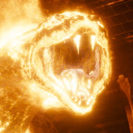
Alexis Wajsbrot is a visual effects specialist who has worked on a number of high-profile films including Harry Potter and the Half-blood Prince, Harry Potter and the Order of Phoenix, Tim Burton's Sweeney Todd, and also on some of those visually stunning commercials you see while waiting for your film to start. His speciality is anything that behaves like a fluid: water, smoke, fire, even fur or cloth. Plus went to see him to find out more.
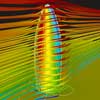
Plus went to see members of Norman Foster's group of architects to learn about the maths behind architecture.

If you've ever watched a flock of birds flying at dusk, or a school of fish reacting to a predator, you'll have been amazed by their perfectly choreographed moves. Yet, complex as this behaviour may seem, it's not all that hard to model it on a computer. Lewis Dartnell presents a hands-on guide for creating your own simulations — no previous experience necessary.

Lewis Dartnell turns the universe into a matrix to model traffic, forest fires and sprawling cities.
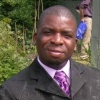
Jet engines, aircraft carriers and telecommunications networks — these are just some of the things that Nira Chamberlain has modelled. And while he's figuring out defence logistics, he's also pursuing a pure mathematical interest in games. Find out what mathematical modelling can do and why it can also make you slim and fluent in French.
Modelling terrorist activity
Computer-generated art is on the rise, and with it comes a further blurring of the boundaries between maths and art. Lewis Dartnell looks at some stunning examples.
Computer generated movies and electronic games: Joan Lasenby tells us about the mathematics and engineering behind them.
Changing your facial appearance with maths