






axiom

Robert Hunt concludes our Origins of Proof series by asking what a proof really is, and how we know that we've actually found one. One for the philosophers to ponder...

Richard Elwes continues his investigation into Cantor and Cohen's work. He investigates the continuum hypothesis, the question that caused Cantor so much grief.

What's the nature of infinity? Are all infinities the same? And what happens if you've got infinitely many infinities? In this article Richard Elwes explores how these questions brought triumph to one man and ruin to another, ventures to the limits of mathematics and finds that, with infinity, you're spoilt for choice.
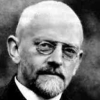
Great minds spark controversy. This is something you'd expect to hear about a great philosopher or artist, but not about a mathematician. Get ready to bin your stereotypes as Rebecca Morris describes some controversial ideas of the great mathematician David Hilbert.

Starting in this issue, PASS Maths is pleased to present a series of articles about proof and logical reasoning. In this article we give a brief introduction to deductive reasoning and take a look at one of the earliest known examples of mathematical proof.
For millennia, puzzles and paradoxes have forced mathematicians to continually rethink their ideas of what proofs actually are. Jon Walthoe explains the tricks involved and how great thinkers like Pythagoras, Newton and Gödel tackled the problems.
Human versus machine: who's better at proving theorems?