Plus.Maths.org
Articles

The organisers of a new INI programme explain why we need to know more about the maths behind machine learning and deep neural networks.

We celebrate with some of our friends, all women doing pioneering work using machine learning in a wide range of applications.

Machine learning started with supervised learning and us providing all the training materials, but we are finding ways for algorithms to learn with far fewer resources.

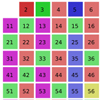
A quick look at one of the most important theorems in number theory.

What can last year's experiences tell us about the coming academic year?

Whether you're lost on a mountainside, or training a neural network, you can rely on the gradient descent algorithm to show you the way!

Machine learning makes many daily activities possible, but how does it work?
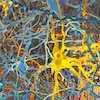
Join us as we follow Kathryn Hess on a mathematical mystery tour of the marvellous intricacy of the brain!
If you love triangles as much as we do, we have great news – you can have them in any dimension you want!
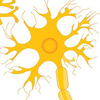
When trying to build an artificial intelligence, it makes sense to mimic the human brain. Artificial neurons do just that.
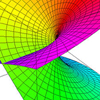
How to take the square root of a complex number — and discover a beautiful new surface in the process.