Plus.Maths.org
network

Find out about an interesting result in graph theory with EMS prize winner Richard Montgomery.

Richard Montgomery has won a prestigious EMS Prize at the European Congress of Mathematics 2024 for work on objects so ubiquitous in everyday life it's easy to forget they're mathematical: networks.

Generating electricity without the use of fossil fuels is not just an engineering and industrial challenge, it is also a huge mathematical challenge.
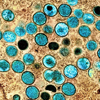
What do we know about monkeypox, what do we not know, and what efforts are going into modelling it?

A bit of graph theory can help to identify key players in a criminal network.
In 1915 a cook in California accidentally infected 93 people with typhoid. Over 100 years on mathematicians shed light on a long-standing mystery surrounding this and other outbreaks of infectious diseases.

From social science to neuroscience, networks are everywhere! In this package we bring together our best content on network and graph theory for you to peruse.
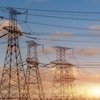
Producing electricity securely, safely, reliably and cheaply, has many challenges. Chris Budd explains that the answer to many of these issues is maths.
Producing electricity securely, safely, reliably and cheaply, has many challenges. Chris Budd explains that the answer to many of these issues is maths.
Producing electricity securely, safely, reliably and cheaply has many challenges. Chris Budd explains that the answer to many of these issues is maths.

Can you find a path through on this city map that crosses every bridge exactly once? Euler's answer to this problem started off the filed of graph theory.
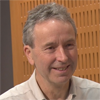
Frank Kelly talks about his work on networks and how inspiration can strike out of the blue.