Plus.Maths.org

entropy

Everyone knows what time is. We can practically feel it ticking away,
marching on in the same direction with horrifying regularity. Time has
enslaved the Western world and become our most precious commodity. Turn it
over to the physicists however, and it begins to
morph, twist and even crumble away. So what is
time exactly?
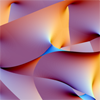
Find out how a theory from physics has provided tools for solving long-standing problems in number theory. And in turn how number theory helps solve the mystery of black holes.
Entropy is the hero of our story – bringing together physics at every scale.

Tea gone cold? Don't worry, you can cheer yourself up with the theory of thermodynamics.

Is it about energy? Is it about disorder? Or is it about information? It's all three!

In memory of Stephen Hawking we look at the equation he was most proud of.

Fundamental physics says time is symmetric - so why does time move forwards for us in a block universe?

Is time real? Are we just puppets living out a future already written? Marina Cortês explains why she thinks time is fundamental and that we don't live in a block universe.

Marina Cortês is one of a growing number of physicists who believe time is fundamental. We ask her about the alternatives theories to the block universe, where time comes first.

Our messy desk is proof of the second law of thermodynamics...

If I tell you something you already know, then that's not very informative. So perhaps information should be measured in terms of unexpectedness, or surprise? In the 1940s Clause Shannon put this idea to use in one of the greatest scientific works of the century.
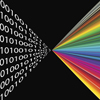
Computers represent information using bits — that's 0s and 1s. It turns out that Claude Shannon's entropy, a measure of information invented long before computers became mainstream, measures the minimal number of bits you need to encode a piece of information.