









prime number

Two computer science students and their professor prove testing for primes is easy - a result that has eluded mathematicians for centuries.

Can Dan Goldston and Cem Yalcin Yildrim repair the hole in their proof to make the biggest breakthrough in prime number theory for 80 years?

The number chosen by the England captain for his Real Madrid shirt is rich in mysterious connotations. But mathematician Marcus du Sautoy backs a new theory to explain why Beckham has plumped for number 23.

Marcus du Sautoy begins a two part exploration of the greatest unsolved problem of mathematics: The Riemann Hypothesis. In the first part, we find out how the German mathematician Gauss, aged only 15, discovered the dice that Nature used to chose the primes.

Following on from his article 'The prime number lottery' in last issue of Plus, Marcus du Sautoy continues his exploration of the greatest unsolved problem of mathematics: The Riemann Hypothesis.

The Riemann Hypothesis is probably the hardest unsolved problem in all of mathematics, and one of the most important. It has to do with prime numbers - the building blocks of arithmetic. Nick Mee, together with Sir Arthur C. Clarke, tells us about the patterns hiding inside numbers.

It has often been observed that mathematics is astonishingly effective as a tool for understanding the universe. But, asks Phil Wilson, why should this be? Is mathematics a universal truth, and how would we tell?
In the first of our tenth birthday year issues, Plus is celebrating the very best that maths has to offer. If you've ever wanted to fly with the birds and swim with the fishes, get the inside knowledge on great London landmarks or just enjoy going to the movies, then this is the issue for you. And we also say happy birthday to the great mathematician Leonard Euler.
The primes are the building blocks of our number system, but there's no general formula that will give you all of them. If you want them, you have to hunt them down one by one. Abigail Kirk investigates a method that does just that.
The prime numbers are the atoms amongst the integers, and while we know that there are infinitely many of them, there's no general formula that generates them all. Julian Havil looks at a little-known algorithm that sieves out all primes up to a given number, and which is astonishing in its simplicity.

7.8 million digits down, only 2.2 million more needed!

A major advance towards the twin prime conjecture
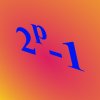
The GIMPS project finds a new Mersenne prime

The first third degree transcendental L-function
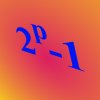
The Great Internet Mersenne Prime Search strikes again