






logarithm
Those who understand compound interest are destined to collect it. Those who don't are doomed to pay it - or so says a well-known source of financial advice. But what is compound interest, and why is it so important? John H. Webb explains.
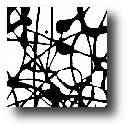
In the late 1940s, American painter Jackson Pollock dripped paint from a can on to vast canvases rolled out across the floor of his barn. Richard P. Taylor explains that Pollock's patterns are really fractals - the fingerprint of Nature.
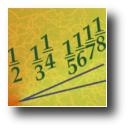
The harmonic series is far less widely known than the arithmetic and geometric series. However, it is linked to a good deal of fascinating mathematics, some challenging Olympiad problems, several surprising applications, and even a famous unsolved problem. John Webb applies some divergent thinking, taking in the weather, traffic flow and card shuffling along the way.

Marcus du Sautoy begins a two part exploration of the greatest unsolved problem of mathematics: The Riemann Hypothesis. In the first part, we find out how the German mathematician Gauss, aged only 15, discovered the dice that Nature used to chose the primes.
You might think that if you collected together a list of naturally-occurring numbers, then as many of them would start with a 1 as with any other digit, but you'd be quite wrong. Jon Walthoe explains why Benford's Law says otherwise, and why tax inspectors are taking an interest.

Modelling Olympic success