








mathematics and music
Kevin Jones investigates the links between music and mathematics, throwing in limericks, Fibonacci and Scott Joplin along the way. Plus is proud to present an extended version of his winning entry for the THES/OUP 1999 Science Writing Prize.
Can the music of Mozart help your mathematics?

Following on from his article 'The prime number lottery' in last issue of Plus, Marcus du Sautoy continues his exploration of the greatest unsolved problem of mathematics: The Riemann Hypothesis.
Skot McDonald talks to Plus about how he uses mathematics to understand music, and how he managed to combine his passions for music and computing to create a successful career.
As anyone starting out knows, the violin is a difficult instrument. It takes time before the novice player can expect to produce a musical note at the desired pitch, instead of a whistle, screech or graunch. Jim Woodhouse and Paul Galluzzo explain why.
According to Shakespeare, music is the food of love. But Jeffrey Rosenthal follows Galileo's observation that the entire universe is written in the language of mathematics - and that includes music.
Teaching a machine to understand music is an incredibly difficult task, which uses all the mathematical power of digital signal processing. But teaching a machine to compose music is quite another matter, and the wonderful world of mathematical patterns proves to be a gold mine. Nick Collins talks to Plus about his artificial musician.

How to interact with your music collection

The Sun is no longer singing solo and is now part of a stellar choir
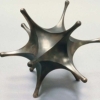
Mathematicians and artists mingle in London
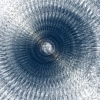
Computer-generated art is on the rise, and with it comes a further blurring of the boundaries between maths and art. Lewis Dartnell looks at some stunning examples.

Survival modelling of albums in the Top 100 casts light on the impact of file sharing
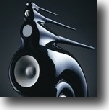
In his second article, David Henwood explains the role of mathematics in the design of Hi-Fi loudspeakers.
In the first of two articles, David Henwood discusses the vibrations that can be harnessed by musical instrument makers.
What does a mathematician from the 3rd century BC have to do with tuning musical instruments in 17th century Europe? Benjamin Wardhaugh tells us about one of the more unusual places you might find Euclid's algorithm being used.
As an electronic musician Oli Freke has always been fascinated by sine waves, so much so that he's created a song based on them for the Geekpop festival, which is currently taking place on the Web. In this article he explores his song, touching on ancient Greek mythology, strange piano tunings and Johann Sebastian Bach.