






chaos
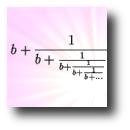
One of the most striking and powerful means of presenting numbers is completely ignored in the mathematics that is taught in schools, and it rarely makes an appearance in university courses. Yet the continued fraction is one of the most revealing representations of many numbers, sometimes containing extraordinary patterns and symmetries. John D. Barrow explains.
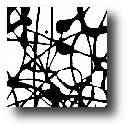
In the late 1940s, American painter Jackson Pollock dripped paint from a can on to vast canvases rolled out across the floor of his barn. Richard P. Taylor explains that Pollock's patterns are really fractals - the fingerprint of Nature.
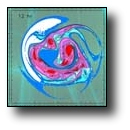
During World Mathematical Year 2000 a sequence of posters were displayed month by month in the trains of the London Underground aiming to stimulate, fascinate - even infuriate passengers! Keith Moffatt tells us about three of the posters from the series.
In issue 29 of Plus, we heard how a simple mathematical equation became the subject of a debate in the UK parliament. Chris Budd and Chris Sangwin continue the story of the mighty quadratic equation.

If you've ever redecorated a bathroom, you'll know that there are only so many ways in which you can tile a flat plane. But once you move into the curved world of hyperbolic geometry, possibilities become endless and the most amazing fractal structures ensue. Caroline Series and David Wright give a short introduction to the maths behind their beautiful images.
Describing the motion of fluids is a huge and unsolved mathematical problem. There are equations that seem to describe it well, but their complete solution is way beyond reach. But could there be a simpler method? The physicist Jerry Gollub tells Plus about a new discovery which combines experiment with sophisticated maths.

Levitation, magical weight loss and perpetual motion — these are just some of the tricks that have been attributed to things that spin. So do gyroscopes need their very own version of physics? Hugh Hunt debunks some myths.
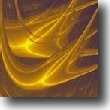
Images based on Lyapunov Exponent fractals are very striking. Andy Burbanks explains what Lyapunov Exponents are, what the much misunderstood phenomenon of chaos really is, and how you can iterate functions to produce marvellous images of chaos from simple mathematics.

Levitation, magical weight loss and perpetual motion — these are just some of the tricks that have been attributed to things that spin. So do gyroscopes need their very own version of physics? Hugh Hunt debunks some myths.
In the last issue Lewis Dartnell explained how chaos on the brain is not only unavoidable but also beneficial. Now he tells us why the same is true for our solar system and sends us on a journey that has been travelled by comets and spacecraft.

Why traffic jams occur for seemingly no reason

With the credit crunch dominating the news, columnists have been wailing about "chaos in the markets", and "turbulent" share prices. But what does move the markets? Are they deterministic, or a result of chance? Colva Roney-Dougal explores the maths, from chaos to group theory.

Fractal Modelling of Pollock paintings called into question

The father of chaos theory dies

Levitation, magical weight loss and perpetual motion — these are just some of the tricks that have been attributed to things that spin. So do gyroscopes need their very own version of physics? Hugh Hunt debunks some myths.
A multi-disciplinary approach to complexity

Levitation, magical weight loss and perpetual motion — these are just some of the tricks that have been attributed to things that spin. So do gyroscopes need their very own version of physics? Hugh Hunt debunks some myths.