
Home
plus.maths.org

Secondary menu

  • My list
  • About Plus
  • Sponsors
  • Subscribe
  • Contact Us
  • Log in
  • Main navigation

  • Home
  • Articles
  • Collections
  • Podcasts
  • Maths in a minute
  • Puzzles
  • Videos
  • Topics and tags
  • For

    • cat icon
      Curiosity
    • newspaper icon
      Media
    • graduation icon
      Education
    • briefcase icon
      Policy

    Popular topics and tags

    Shapes

    • Geometry
    • Vectors and matrices
    • Topology
    • Networks and graph theory
    • Fractals

    Numbers

    • Number theory
    • Arithmetic
    • Prime numbers
    • Fermat's last theorem
    • Cryptography

    Computing and information

    • Quantum computing
    • Complexity
    • Information theory
    • Artificial intelligence and machine learning
    • Algorithm

    Data and probability

    • Statistics
    • Probability and uncertainty
    • Randomness

    Abstract structures

    • Symmetry
    • Algebra and group theory
    • Vectors and matrices

    Physics

    • Fluid dynamics
    • Quantum physics
    • General relativity, gravity and black holes
    • Entropy and thermodynamics
    • String theory and quantum gravity

    Arts, humanities and sport

    • History and philosophy of mathematics
    • Art and Music
    • Language
    • Sport

    Logic, proof and strategy

    • Logic
    • Proof
    • Game theory

    Calculus and analysis

    • Differential equations
    • Calculus

    Towards applications

    • Mathematical modelling
    • Dynamical systems and Chaos

    Applications

    • Medicine and health
    • Epidemiology
    • Biology
    • Economics and finance
    • Engineering and architecture
    • Weather forecasting
    • Climate change

    Understanding of mathematics

    • Public understanding of mathematics
    • Education

    Get your maths quickly

    • Maths in a minute

    Main menu

  • Home
  • Articles
  • Collections
  • Podcasts
  • Maths in a minute
  • Puzzles
  • Videos
  • Topics and tags
  • Audiences

    • cat icon
      Curiosity
    • newspaper icon
      Media
    • graduation icon
      Education
    • briefcase icon
      Policy

    Secondary menu

  • My list
  • About Plus
  • Sponsors
  • Subscribe
  • Contact Us
  • Log in
  • Celebrating National Biology Week

    12 October, 2012

    The first ever National Biology Week is happening between October 13th and 19th 2012. It's organised by the Society of Biology and there'll be events around the country giving everyone the chance to learn about the second-most fascinating science (if you count maths as a science). But if you'd rather stay in and cuddle up with your laptop you can read about the many overlaps between maths and biology here on Plus. They not only drive biology but also pose new challenges for maths. Here are some of our favourite maths and biology articles (and there's more in our project Do you know what's good for you: Mathematics and the biomedical sciences).
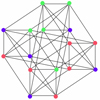
    Biology's next microscope, mathematics' next physics — It is thought that the next great advances in biology and medicine will be discovered with mathematics. As biology stands on the brink of becoming a theoretical science this article asks if there is more to this collaboration than maths acting as biology's newest microscope.


    How the leopard got its spots — How does the uniform ball of cells that make up an embryo differentiate to create the dramatic patterns of a zebra or leopard? How come there are spotty animals with stripy tails, but no stripy animals with spotty tails? This article solves these, and other, puzzles of animal patterning.

    Reconstructing the tree of life — At the heart of Darwin's theory of evolution lies a beautifully simple mathematical object: the evolutionary tree. In this article we look at how maths is used to reconstruct and understand it.


    Finding your way home without knowing where you are — When insects go foraging, they zoom off from their nest in complex zig-zag paths. How do they manage to find their way back home? And how do they manage to do so along a straight path?


    If you're a teacher looking for hands-on activities on maths and biology, try the Maths and our Health and Disease Dynamics schools packs from our sister site Motivate and the stemNRICH Living World collection from our sister site NRICH.

    Read more about...
    biology
    • Log in or register to post comments

    Read more about...

    biology
    University of Cambridge logo

    Plus is part of the family of activities in the Millennium Mathematics Project.
    Copyright © 1997 - 2025. University of Cambridge. All rights reserved.

    Terms