Home
plus.maths.org

Secondary menu

  • My list
  • About Plus
  • Sponsors
  • Subscribe
  • Contact Us
  • Log in
  • Main navigation

  • Home
  • Articles
  • Collections
  • Podcasts
  • Maths in a minute
  • Puzzles
  • Videos
  • Topics and tags
  • For

    • cat icon
      Curiosity
    • newspaper icon
      Media
    • graduation icon
      Education
    • briefcase icon
      Policy

    Popular topics and tags

    Shapes

    • Geometry
    • Vectors and matrices
    • Topology
    • Networks and graph theory
    • Fractals

    Numbers

    • Number theory
    • Arithmetic
    • Prime numbers
    • Fermat's last theorem
    • Cryptography

    Computing and information

    • Quantum computing
    • Complexity
    • Information theory
    • Artificial intelligence and machine learning
    • Algorithm

    Data and probability

    • Statistics
    • Probability and uncertainty
    • Randomness

    Abstract structures

    • Symmetry
    • Algebra and group theory
    • Vectors and matrices

    Physics

    • Fluid dynamics
    • Quantum physics
    • General relativity, gravity and black holes
    • Entropy and thermodynamics
    • String theory and quantum gravity

    Arts, humanities and sport

    • History and philosophy of mathematics
    • Art and Music
    • Language
    • Sport

    Logic, proof and strategy

    • Logic
    • Proof
    • Game theory

    Calculus and analysis

    • Differential equations
    • Calculus

    Towards applications

    • Mathematical modelling
    • Dynamical systems and Chaos

    Applications

    • Medicine and health
    • Epidemiology
    • Biology
    • Economics and finance
    • Engineering and architecture
    • Weather forecasting
    • Climate change

    Understanding of mathematics

    • Public understanding of mathematics
    • Education

    Get your maths quickly

    • Maths in a minute

    Main menu

  • Home
  • Articles
  • Collections
  • Podcasts
  • Maths in a minute
  • Puzzles
  • Videos
  • Topics and tags
  • Audiences

    • cat icon
      Curiosity
    • newspaper icon
      Media
    • graduation icon
      Education
    • briefcase icon
      Policy

    Secondary menu

  • My list
  • About Plus
  • Sponsors
  • Subscribe
  • Contact Us
  • Log in
  • Telescope topology

    11 August, 2023

    Topology studies shapes without worrying about finer like the values of lengths, angles, or areas. This does make things rather slippery, but maths can help: topology delivers some beautiful examples of how mathematical language can not only make intuition precise, but also expand our intuitive horizon.

    With this collection of articles we explore the field using an exciting breakthrough as an illustration: the so-called telescope conjecture which has recently been disproved by Robert Burklund, Jeremy Hahn, Ishan Levy, and Tomer Schlank. The breakthrough was announced at a conference held at the Isaac Newton Institute for Mathematical Sciences called Homotopy: Fruit of the fertile furrow.

    The articles below give you a gist of the telescope conjecture, as well as explanations of some important concepts in topology.
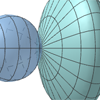
    Spheres within spheres: A journey through many dimensions — Find out why holes are important in topology, and how spheres can help you define higher-dimensional holes!
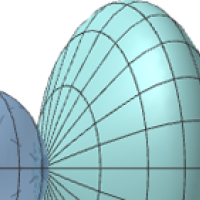
    Spheres within spheres: Simplicity and failure — This article continues our exploration of the telescope conjecture, and what its being disproved means for the area.
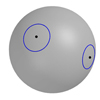
    Telescope topology: the podcast — In this episode of our Maths on the move podcast we hear from two of the mathematicians who resolved the telescope conjecture.

    Maths in a minute: Topology — A brief explainer of what topology is all about.
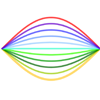
    Maths in a minute: Homotopy — The concept of homotopy is central to the telescope conjecture. And it's a beautiful example of how mathematics can make intuition precise.
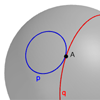
    Maths in a minute: The fundamental group — The fundamental group explores the nature of a shape in terms of the loops you can draw on it.
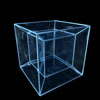
    Maths in a minute: Higher dimensions — They might smack of sci-fi, but higher dimensions are nothing out of the ordinary in maths, and they're not actually that hard to define.

    Maths in three minutes: Groups — Groups are collections of objects that exhibit a neat, self-contained internal structure. They crop up all over maths, including in topology. Here's a brief introduction.


    This content forms part of our collaboration with the Isaac Newton Institute for Mathematical Sciences (INI) – you can find all the content from the collaboration here.

    The INI is an international research centre and our neighbour here on the University of Cambridge's maths campus. It attracts leading mathematical scientists from all over the world, and is open to all. Visit www.newton.ac.uk to find out more.

    INI logo

    Read more about...
    INI
    topology
    homotopy
    fundamental group
    • Log in or register to post comments

    Read more about...

    INI
    topology
    homotopy
    fundamental group
    University of Cambridge logo

    Plus is part of the family of activities in the Millennium Mathematics Project.
    Copyright © 1997 - 2025. University of Cambridge. All rights reserved.

    Terms