






golden ratio
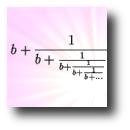
One of the most striking and powerful means of presenting numbers is completely ignored in the mathematics that is taught in schools, and it rarely makes an appearance in university courses. Yet the continued fraction is one of the most revealing representations of many numbers, sometimes containing extraordinary patterns and symmetries. John D. Barrow explains.
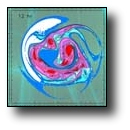
During World Mathematical Year 2000 a sequence of posters were displayed month by month in the trains of the London Underground aiming to stimulate, fascinate - even infuriate passengers! Keith Moffatt tells us about three of the posters from the series.
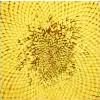
It was Euclid who first defined the Golden Ratio, and ever since people have been fascinated by its extraordinary properties. Find out if beauty is in the eye of the beholder, and how the Golden Ratio crosses from mathematics to the arts.
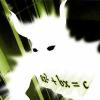
It isn't often that a mathematical equation makes the national press, far less popular radio, or most astonishingly of all, is the subject of a debate in the UK parliament. However, as Chris Budd and Chris Sangwin tell us, in 2003 the good old quadratic equation, which we all learned about in school, reached these dizzy pinnacles of fame.
Fibonacci, famous for the Fibonacci sequence, also introduced the decimal system into Europe.
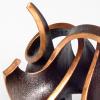
Many people find no beauty and pleasure in maths - but, as Lewis Dartnell explains, our brains have evolved to take pleasure in rhythm, structure and pattern. Since these topics are fundamentally mathematical, it should be no surprise that mathematical methods can illuminate our aesthetic sense.
This issue of Plus is largely a matter of chance. We find an almighty coincidence and try to model it, explore whether statistical media headlines illuminate or mislead, and try to get our head around league tables. On a more certain note, we examine string theory, which many people think explains everything, look back at one of the greatest mathematical works ever written, and try to pin down the number five.