






geometry
Some people think science is worthwhile because it is useful; some argue that it also increases our aesthetic appreciation of art and nature. But you rarely hear anyone argue that science is beautiful in itself. With the start of our new series "Imaging maths", Plus argues for recognition of a mathematical aesthetic.

Why do so many people say they hate mathematics, asks David Acheson? The truth, he says, is that most of them have never been anywhere near it, and that mathematicians could do more to change this perception - perhaps by emphasising the element of surprise that so often accompanies mathematics at its best.
Everyone knows what symmetry is, and the ability to spot it seems to be hard-wired into our brains. Mario Livio explains how not only shapes, but also laws of nature can be symmetrical, and how this aids our understanding of the universe.
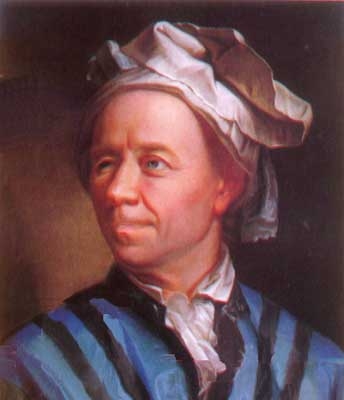
Leonhard Euler was one of the most prolific mathematicians of all time. This year marks the 300th anniversary of his birth. Robin Wilson starts off a four part series on Euler with a look at his life and work.

Dusty books, chalky blackboards and checked shirts are all things usually associated with maths. But according to Jonathan Tims, pubs, hot chocolate and cats can be far more inspirational. Join him on a trip through shadow land.
One of the many strange ideas from quantum mechanics is that space isn't continuous but consists of tiny chunks. Ordinary geometry is useless when it comes to dealing with such a space, but algebra makes it possible to come up with a model of spacetime that might do the trick. And it can all be tested by a satellite. Shahn Majid met up with Plus to explain.
Plus went to see members of Norman Foster's group of architects to learn about the maths behind architecture.

Geometry is power
You might know the famous formula for an area of a circle, but why does this formula work? Tom Körner's explanation really is a piece of cake, served up with a hefty estimate of pi.
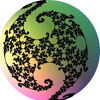
If you've ever redecorated a bathroom, you'll know that there are only so many ways in which you can tile a flat plane. But once you move into the curved world of hyperbolic geometry, possibilities become endless and the most amazing fractal structures ensue. Caroline Series and David Wright give a short introduction to the maths behind their beautiful images.
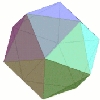
Leonhard Euler, the most prolific mathematician of all time, would have celebrated his 300th birthday this year. In this article, the second in a four-part series on Euler and his work, Abigail Kirk explores one of the formulae that carry his name.
This issue of Plus is largely a matter of chance. We find an almighty coincidence and try to model it, explore whether statistical media headlines illuminate or mislead, and try to get our head around league tables. On a more certain note, we examine string theory, which many people think explains everything, look back at one of the greatest mathematical works ever written, and try to pin down the number five.
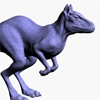
The computer animation used in movies and games is now so lifelike, it is very hard to believe that you are actually watching a surface built from simple shapes of triangles. Phil Dench tells Plus how he uses mathematics to help bring these models to life.
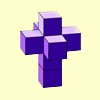
Sonia Buckley travels through higher dimensions

..You can see forever. Or can you?
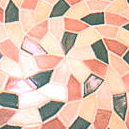
We've all heard of origami. It's all about making paper birds and pretty boxes, and is really just a game invented by Japanese kids, right? Prepare to be surprised as Liz Newton takes you on a journey of origami, maths and science.
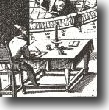
Johannes Kepler (1571-1630) is now chiefly remembered as a mathematical astronomer who discovered three laws that describe the motion of the planets. J.V. Field continues our series on the origins of proof with an examination of Kepler's astronomy.
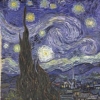
Van Gogh paintings mimic the physics that governs turbulence
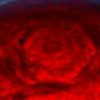
We may not have found life out there, but there is a hexagon on Saturn.
A public discussion explores deep questions

Maths explains the rainbow's secrets
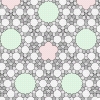
Squares do it, triangles do it, even hexagons do it — but pentagons don't. They just won't fit together to tile a flat surface. So are there any tilings based on fiveness? Craig Kaplan takes us through the five-fold tiling problem and uncovers some interesting designs in the process.
A Beautiful Mathematical Method for Modelling Viruses
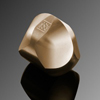
A Gömböc is a strange thing. It looks like an egg with sharp edges, and when you put it down it starts wriggling and rolling around as if it were alive. Until quite recently, no-one knew whether Gömböcs even existed. Even now, Gábor Domokos, one of their discoverers, reckons that in some sense they barely exists at all. So what are Gömböcs and what makes them special?
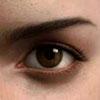
Computer generated movies and electronic games: Joan Lasenby tells us about the mathematics and engineering behind them.
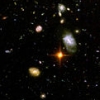
Cambridge celebrates 25 years since the first very early Universe workshop

Adding weight helps Earth dodge killer asteroids
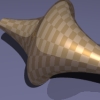
The Abel Prize 2009 goes to Mikhail Gromov
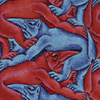
Tilings have adorned buildings from ancient Rome to the Islamic world, from Victorian England to colonial Mexico. But while it sometimes seems free from worldly limitations, tiling is a very precise art, where not much can be left to chance. We can push and turn and wiggle, but if the maths is not right, it isn't going to tile. Josefina Alvarez and Cesar L. Garcia investigate.
Mathematicians offer new proof of quasicrystals' strange electronic properties.