








differential equation
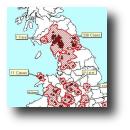
Over the past one hundred years, mathematics has been used to understand and predict the spread of diseases, relating important public-health questions to basic infection parameters. Matthew Keeling describes some of the mathematical developments that have improved our understanding and predictive ability.
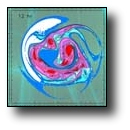
During World Mathematical Year 2000 a sequence of posters were displayed month by month in the trains of the London Underground aiming to stimulate, fascinate - even infuriate passengers! Keith Moffatt tells us about three of the posters from the series.
In issue 29 of Plus, we heard how a simple mathematical equation became the subject of a debate in the UK parliament. Chris Budd and Chris Sangwin continue the story of the mighty quadratic equation.
Read about what it is like to work at the Meteorological Office in this interview with Helen Hewson. There's also a contact point for careers information.

Riaz Ahmad's mathematical career has led him from the complexities of blood flow to the risks of the financial markets via underwater acoustics. Plus found out how maths can explain all this and more.
The Arctic ice cap is melting fast and the consequences are grim. Mathematical modelling is key to predicting how much longer the ice will be around and assessing the impact of an ice free Arctic on the rest of the planet. Plus spoke to Peter Wadhams from the Polar Ocean Physics Group at the University of Cambridge to get a glimpse of the group's work.
In the first of two articles, David Henwood discusses the vibrations that can be harnessed by musical instrument makers.

Saying that someone is a chaotic thinker might seem like an insult - but, according to Lewis Dartnell, it could be that the mathematical phenomenon of chaos is a crucial part of what makes our brains work.

Mathematicians explain how plants climb

In 1979 decorating work in a house in Vienna revealed a set of medieval frescoes depicting a cycle of songs by a 13th century poet, who was particularly fond of satirising the erotic relationships between knights and peasant maidens. The frescoes are of great historical significance, but they are badly damaged. In this article Carola Schönlieb explores how mathematicians use the heat equation to fill in the gaps.

Peter Markowich is a mathematician who likes to take pictures. At first his two interests seemed completely separate to him, but then he realised that behind every picture there is a mathematical story to tell. Plus went to see him to find out more, and ended up with a pictorial introduction to partial differential equations.
Peter D Lax wins the Abel Prize 2005.

A new foam with medical potential