
Home
plus.maths.org

Secondary menu

  • My list
  • About Plus
  • Sponsors
  • Subscribe
  • Contact Us
  • Log in
  • Main navigation

  • Home
  • Articles
  • Collections
  • Podcasts
  • Maths in a minute
  • Puzzles
  • Videos
  • Topics and tags
  • For

    • cat icon
      Curiosity
    • newspaper icon
      Media
    • graduation icon
      Education
    • briefcase icon
      Policy

    Popular topics and tags

    Shapes

    • Geometry
    • Vectors and matrices
    • Topology
    • Networks and graph theory
    • Fractals

    Numbers

    • Number theory
    • Arithmetic
    • Prime numbers
    • Fermat's last theorem
    • Cryptography

    Computing and information

    • Quantum computing
    • Complexity
    • Information theory
    • Artificial intelligence and machine learning
    • Algorithm

    Data and probability

    • Statistics
    • Probability and uncertainty
    • Randomness

    Abstract structures

    • Symmetry
    • Algebra and group theory
    • Vectors and matrices

    Physics

    • Fluid dynamics
    • Quantum physics
    • General relativity, gravity and black holes
    • Entropy and thermodynamics
    • String theory and quantum gravity

    Arts, humanities and sport

    • History and philosophy of mathematics
    • Art and Music
    • Language
    • Sport

    Logic, proof and strategy

    • Logic
    • Proof
    • Game theory

    Calculus and analysis

    • Differential equations
    • Calculus

    Towards applications

    • Mathematical modelling
    • Dynamical systems and Chaos

    Applications

    • Medicine and health
    • Epidemiology
    • Biology
    • Economics and finance
    • Engineering and architecture
    • Weather forecasting
    • Climate change

    Understanding of mathematics

    • Public understanding of mathematics
    • Education

    Get your maths quickly

    • Maths in a minute

    Main menu

  • Home
  • Articles
  • Collections
  • Podcasts
  • Maths in a minute
  • Puzzles
  • Videos
  • Topics and tags
  • Audiences

    • cat icon
      Curiosity
    • newspaper icon
      Media
    • graduation icon
      Education
    • briefcase icon
      Policy

    Secondary menu

  • My list
  • About Plus
  • Sponsors
  • Subscribe
  • Contact Us
  • Log in
  • Congratulations to Martin Hairer!

    11 September, 2020

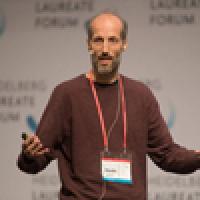
    The mathematician Martin Hairer has been awarded the 2021 Breakthrough Prize for Mathematics which, apart from the accolade, comes with $3 million in prize money.

    Hairer received the prize for "transformative contributions to the theory of stochastic analysis, particularly the theory of regularity structures in stochastic partial differential equations". You can find out more about what this means in the following article and podcast, which we produced after interviewing Hairer about receiving the Fields Medal, one of the highest honours in maths, in 2014.

    Martin Hairer: At the interface — A brief look at Hairer's groundbreaking work, which involves the maths of change and chance.

    Interview with Martin Hairer: The podcast — Listen to Hairer talk about his research in this podcast, recorded a day before he received the Fields Medal in 2014.

    Hairer has also written us a series of articles about the maths of randomness. These are based on a lecture he gave at the Heidelberg Laureate Forum 2017, where we also recorded a video of Hairer talking about issue surrounding randomness. The video is shown below.

    The maths of randomness — Randomness is surprisingly hard to define. But as Hairer explains in this article, the mathematical language we use to describe it is beautifully succinct.

    The maths of randomness: Symmetry — In this article Hairer explains why symmetry is one of the two guiding principles in understanding probabilities.

    The maths of randomness: Universality — The second guiding principle of the maths of randomness is universality, which Hairer explains in this article.

    The two envelopes problem — Here's a brain teaser Hairer presented at the Heidelberg Laureate Forum 2018. See if you can crack it!

    Read more about...
    Breakthrough prize
    randomness
    differential equation
    • Log in or register to post comments

    Read more about...

    Breakthrough prize
    randomness
    differential equation
    University of Cambridge logo

    Plus is part of the family of activities in the Millennium Mathematics Project.
    Copyright © 1997 - 2025. University of Cambridge. All rights reserved.

    Terms