
Home
plus.maths.org

Secondary menu

  • My list
  • About Plus
  • Sponsors
  • Subscribe
  • Contact Us
  • Log in
  • Main navigation

  • Home
  • Articles
  • Collections
  • Podcasts
  • Maths in a minute
  • Puzzles
  • Videos
  • Topics and tags
  • For

    • cat icon
      Curiosity
    • newspaper icon
      Media
    • graduation icon
      Education
    • briefcase icon
      Policy

    Popular topics and tags

    Shapes

    • Geometry
    • Vectors and matrices
    • Topology
    • Networks and graph theory
    • Fractals

    Numbers

    • Number theory
    • Arithmetic
    • Prime numbers
    • Fermat's last theorem
    • Cryptography

    Computing and information

    • Quantum computing
    • Complexity
    • Information theory
    • Artificial intelligence and machine learning
    • Algorithm

    Data and probability

    • Statistics
    • Probability and uncertainty
    • Randomness

    Abstract structures

    • Symmetry
    • Algebra and group theory
    • Vectors and matrices

    Physics

    • Fluid dynamics
    • Quantum physics
    • General relativity, gravity and black holes
    • Entropy and thermodynamics
    • String theory and quantum gravity

    Arts, humanities and sport

    • History and philosophy of mathematics
    • Art and Music
    • Language
    • Sport

    Logic, proof and strategy

    • Logic
    • Proof
    • Game theory

    Calculus and analysis

    • Differential equations
    • Calculus

    Towards applications

    • Mathematical modelling
    • Dynamical systems and Chaos

    Applications

    • Medicine and health
    • Epidemiology
    • Biology
    • Economics and finance
    • Engineering and architecture
    • Weather forecasting
    • Climate change

    Understanding of mathematics

    • Public understanding of mathematics
    • Education

    Get your maths quickly

    • Maths in a minute

    Main menu

  • Home
  • Articles
  • Collections
  • Podcasts
  • Maths in a minute
  • Puzzles
  • Videos
  • Topics and tags
  • Audiences

    • cat icon
      Curiosity
    • newspaper icon
      Media
    • graduation icon
      Education
    • briefcase icon
      Policy

    Secondary menu

  • My list
  • About Plus
  • Sponsors
  • Subscribe
  • Contact Us
  • Log in
  • Happy birthday, George Boole!
    26 October, 2015
    George Boole

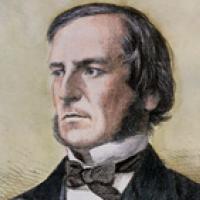
    George Boole (1815-1864).

    Computers, smart phones, digital TV and radio — all of these are based on the work of a man who died before electric light bulbs even came on the market. His name is George Boole, born 200 years ago on November 2nd 1815. To celebrate his bicentenary we bring you an introduction to the man and his work, as well as several other articles exploring the world of 0s and 1s that Boole discovered. Enjoy!

    George Boole and the wonderful world of 0s and 1s — George Boole was destined to become a cobbler, but ended up laying the foundations for modern digital technology. Here is a quick introduction to his work.

    A bright idea — This article further illuminates the connection between logic, binary arithmetic and computers, using the handy analogy of light bulbs.

    Codes, computers and trees — Most of us know that computers store information using only 0s and 1s. Here is a gentle introduction to how this works.

    Information, decisions and bits — A bit is a unit of information, just as a centimetre is a unit of length. But how can we possibly chop information up in this way?

    Read more about...
    boolean algebra
    logic
    computer science
    binary logic
    • Log in or register to post comments

    Read more about...

    boolean algebra
    logic
    computer science
    binary logic
    University of Cambridge logo

    Plus is part of the family of activities in the Millennium Mathematics Project.
    Copyright © 1997 - 2025. University of Cambridge. All rights reserved.

    Terms