









network

C. J. Budd and C. J. Sangwin show us how to create mazes, and explain why mazes and networks have much in common. In fact the study of mazes and labyrinths takes us into the dark territory of murder, suicide, adultery, passion, intrigue, religion and conquest...
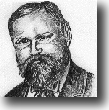
The mathematics underlying today's complex telephone networks is still based on his work. Erlang was the first person to study the problem of telephone networks.

Mathematics shows that open source software beats closed source software in the race to fix bugs.

Jet engines, aircraft carriers and telecommunications networks — these are just some of the things that Nira Chamberlain has modelled. And while he's figuring out defence logistics, he's also pursuing a pure mathematical interest in games. Find out what mathematical modelling can do and why it can also make you slim and fluent in French.

A multi-disciplinary approach to complexity

Is geometry hard-wired into our brain?

How to interact with your music collection

The next total eclipse of the Sun will be in March 2006

Why do the rich and popular get richer and more popular?

Find out how modern telephone networks use mathematics to make it possible for a person to dial a friend in another country just as easily as if they were in the same street, or to read web pages that are on a computer in another continent.

How rappers interact

Modelling terrorist activity

Have you got as many friends as you think?

Maths brings down the Mafia