






proof

Robert Hunt concludes our Origins of Proof series by asking what a proof really is, and how we know that we've actually found one. One for the philosophers to ponder...

Why do so many people say they hate mathematics, asks David Acheson? The truth, he says, is that most of them have never been anywhere near it, and that mathematicians could do more to change this perception - perhaps by emphasising the element of surprise that so often accompanies mathematics at its best.

Kurt Gödel, who would have celebrated his 100th birthday next year, showed in 1931 that the power of maths to explain the world is limited: his famous incompleteness theorem proves mathematically that maths cannot prove everything. Gregory Chaitin explains why he thinks that Gödel's incompleteness theorem is only the tip of the iceberg, and why mathematics is far too complex ever to be described by a single theory.

Starting in this issue, PASS Maths is pleased to present a series of articles about proof and logical reasoning. In this article we give a brief introduction to deductive reasoning and take a look at one of the earliest known examples of mathematical proof.
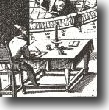
Johannes Kepler (1571-1630) is now chiefly remembered as a mathematical astronomer who discovered three laws that describe the motion of the planets. J.V. Field continues our series on the origins of proof with an examination of Kepler's astronomy.

Has mathematics become an experimental science?
For millennia, puzzles and paradoxes have forced mathematicians to continually rethink their ideas of what proofs actually are. Jon Walthoe explains the tricks involved and how great thinkers like Pythagoras, Newton and Gödel tackled the problems.
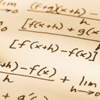
Human versus machine: who's better at proving theorems?