





Medicine
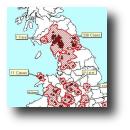
Over the past one hundred years, mathematics has been used to understand and predict the spread of diseases, relating important public-health questions to basic infection parameters. Matthew Keeling describes some of the mathematical developments that have improved our understanding and predictive ability.
Mathematics makes a clean sweep in the Nobel Prizes.
Can mathematics help defend against another attack?
To make hard decisions, you need hard facts. Medical statistics can help us to decide what treatment to look for when we are ill, and to estimate our chances of recovery.
Ever since the thalidomide tragedy, governments have realised the importance of a strict licensing regime for new drugs. Medical statistician Robert Hemmings explains how his work for the Medicines Control Agency helps to safeguard the health of the nation.

Use our animations to find out
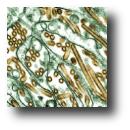
Researchers have used mathematical modelling to understand the evolution of the influenza virus.

To study a system, mathematicians begin by identifying its most crucial elements, and try to describe them in simple mathematical terms. As Phil Wilson tells us, this simplification is the essence of mathematical modelling.

What's the risk of passive smoking? Or climate change? How big is the terrorist threat? And should we trust league tables? These issues concern all of us, but it's not always easy to make sense of the barrage of media information. David Spiegelhalter, Winton Professor for the Public Understanding of Risk, gives Plus his take on uncertainty.
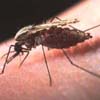
Take part in research from home, and help defeat malaria with Africa@home.

How to manipulate risk statistics

How to manipulate risk statistics
How advanced mathematical techniques save lives.
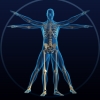
Not so long ago, if you had a medical complaint, doctors had to open you up to see what it was. These days they have a range of sophisticated imaging techniques at their disposal, saving you the risk and pain of an operation. Chris Budd and Cathryn Mitchell look at the maths that isn't only responsible for these medical techniques, but also for much of the digital revolution.

A new foam with medical potential

Plus starts a new project on health and medicine
The European Science Foundation backs systems biology
New insights into gene permutations

How does it spread?

A new Bayesian network helps predict the severity of the disease
Which drugs should be available on the NHS?
How do we know how many people have got it?