
Home
plus.maths.org

Secondary menu

  • My list
  • About Plus
  • Sponsors
  • Subscribe
  • Contact Us
  • Log in
  • Main navigation

  • Home
  • Articles
  • Collections
  • Podcasts
  • Maths in a minute
  • Puzzles
  • Videos
  • Topics and tags
  • For

    • cat icon
      Curiosity
    • newspaper icon
      Media
    • graduation icon
      Education
    • briefcase icon
      Policy

    Popular topics and tags

    Shapes

    • Geometry
    • Vectors and matrices
    • Topology
    • Networks and graph theory
    • Fractals

    Numbers

    • Number theory
    • Arithmetic
    • Prime numbers
    • Fermat's last theorem
    • Cryptography

    Computing and information

    • Quantum computing
    • Complexity
    • Information theory
    • Artificial intelligence and machine learning
    • Algorithm

    Data and probability

    • Statistics
    • Probability and uncertainty
    • Randomness

    Abstract structures

    • Symmetry
    • Algebra and group theory
    • Vectors and matrices

    Physics

    • Fluid dynamics
    • Quantum physics
    • General relativity, gravity and black holes
    • Entropy and thermodynamics
    • String theory and quantum gravity

    Arts, humanities and sport

    • History and philosophy of mathematics
    • Art and Music
    • Language
    • Sport

    Logic, proof and strategy

    • Logic
    • Proof
    • Game theory

    Calculus and analysis

    • Differential equations
    • Calculus

    Towards applications

    • Mathematical modelling
    • Dynamical systems and Chaos

    Applications

    • Medicine and health
    • Epidemiology
    • Biology
    • Economics and finance
    • Engineering and architecture
    • Weather forecasting
    • Climate change

    Understanding of mathematics

    • Public understanding of mathematics
    • Education

    Get your maths quickly

    • Maths in a minute

    Main menu

  • Home
  • Articles
  • Collections
  • Podcasts
  • Maths in a minute
  • Puzzles
  • Videos
  • Topics and tags
  • Audiences

    • cat icon
      Curiosity
    • newspaper icon
      Media
    • graduation icon
      Education
    • briefcase icon
      Policy

    Secondary menu

  • My list
  • About Plus
  • Sponsors
  • Subscribe
  • Contact Us
  • Log in
  • How to take a perfect penalty

    13 June, 2014

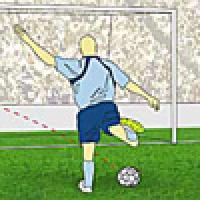
    "It's failure to prepare mentally and failure to take practicing penalties really seriously." This is Ken Bray's explanation for England's dismal performance in penalty shootouts. England are successful in only 17% of their encounters, compared to Germany's impressive 80%. Bray is an expert in the science of football, and he has studied the physics as well as the psychology of penalties and analysed the statistics. The result are three steps to ensure a perfect penalty, which he explains in this video. You can find out more about the science and maths of football in Bray's Plus articles on football.

    Read more about...
    mathematics in sport
    penalty tactics
    football
    • Log in or register to post comments

    Anonymous

    28 March 2016

    Permalink

    the possibility of inaccuracy is lessened if the shot is kept low, simply because you are less likely to go over the cross-bar. Many failures are because players aim for the known unstoppable area in the top corner of the goal which although the best place because of its size and position is vulnerable to inaccuracy even for good players. Low confidence will also cause many players to aim for the bottom corner for this reason.

    • Log in or register to post comments

    Read more about...

    mathematics in sport
    penalty tactics
    football
    University of Cambridge logo

    Plus is part of the family of activities in the Millennium Mathematics Project.
    Copyright © 1997 - 2025. University of Cambridge. All rights reserved.

    Terms