Content about “
uncertainty

Article
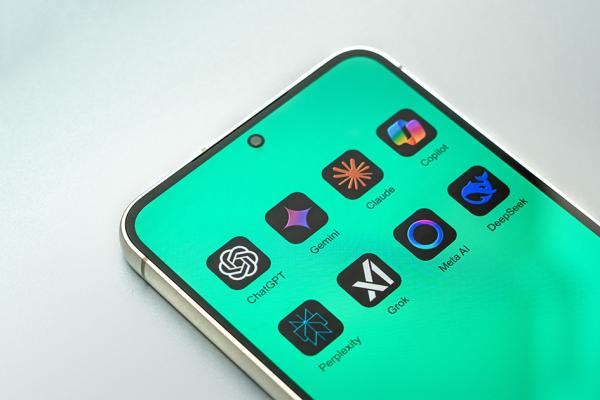
Phone screen showing AI apps

Talking about truth with ChatGPT

How confident is the Large Language Model chatbot that its answers are correct? And how confident can we be about this confidence? This article investigates.

Article

What are sigma levels?

Find out how scientists, from physicists to geneticists, measure their confidence in their results.
Article
Icons of three women

Understanding uncertainty: Visualising probabilities

Probabilities and statistics: they are everywhere, but they are hard to understand and can be counter-intuitive. So what's the best way of communicating them to an audience that doesn't have the time, desire, or background to get stuck into the numbers? This article explores modern visualisation techniques and finds that the right picture really can be worth a thousand words.

Article

Understanding uncertainty: The Premier League

This is the second part of our new column on risk and uncertainty. David Spiegelhalter, Winton Professor for the Public Understanding of Risk at the University of Cambridge, continues examining league tables using the Premier League as an example. Find out just how much — or how little — these simple rankings can tell you.

Article

Understanding uncertainty: A league table lottery

League tables are controversial and for good reason. Few things are simple enough to be measured by a single outcome like, for example, the number of exam passes or successful heart operations. But even if we do accept a single yardstick, we haven't yet reckoned with chance, which by itself can produce apparent patterns to delight any tabloid editor.

Article

Pools of blood

A biologist has developed a blood test for detecting a certain minor abnormality in infants. Obviously if you have blood samples from 100 children, you could find out which children are affected by running 100 separate tests. But mathematicians are never satisfied by the obvious answer. Keith Ball uses information theory to explain how to cut down the number of tests significantly, by pooling samples of blood.