

Home
plus.maths.org

Secondary menu

  • My list
  • About Plus
  • Sponsors
  • Subscribe
  • Contact Us
  • Log in
  • Main navigation

  • Home
  • Articles
  • Collections
  • Podcasts
  • Maths in a minute
  • Puzzles
  • Videos
  • Topics and tags
  • For

    • cat icon
      Curiosity
    • newspaper icon
      Media
    • graduation icon
      Education
    • briefcase icon
      Policy

    Popular topics and tags

    Shapes

    • Geometry
    • Vectors and matrices
    • Topology
    • Networks and graph theory
    • Fractals

    Numbers

    • Number theory
    • Arithmetic
    • Prime numbers
    • Fermat's last theorem
    • Cryptography

    Computing and information

    • Quantum computing
    • Complexity
    • Information theory
    • Artificial intelligence and machine learning
    • Algorithm

    Data and probability

    • Statistics
    • Probability and uncertainty
    • Randomness

    Abstract structures

    • Symmetry
    • Algebra and group theory
    • Vectors and matrices

    Physics

    • Fluid dynamics
    • Quantum physics
    • General relativity, gravity and black holes
    • Entropy and thermodynamics
    • String theory and quantum gravity

    Arts, humanities and sport

    • History and philosophy of mathematics
    • Art and Music
    • Language
    • Sport

    Logic, proof and strategy

    • Logic
    • Proof
    • Game theory

    Calculus and analysis

    • Differential equations
    • Calculus

    Towards applications

    • Mathematical modelling
    • Dynamical systems and Chaos

    Applications

    • Medicine and health
    • Epidemiology
    • Biology
    • Economics and finance
    • Engineering and architecture
    • Weather forecasting
    • Climate change

    Understanding of mathematics

    • Public understanding of mathematics
    • Education

    Get your maths quickly

    • Maths in a minute

    Main menu

  • Home
  • Articles
  • Collections
  • Podcasts
  • Maths in a minute
  • Puzzles
  • Videos
  • Topics and tags
  • Audiences

    • cat icon
      Curiosity
    • newspaper icon
      Media
    • graduation icon
      Education
    • briefcase icon
      Policy

    Secondary menu

  • My list
  • About Plus
  • Sponsors
  • Subscribe
  • Contact Us
  • Log in
  • Who's watching: Context is everything

    21 March, 2017

    Quantum mechanics appears to say that the world at its smallest scales is fuzzy. Little particles, such as electrons, don't have precise locations in space and they don't travel at well-defined speeds, for example. It's only when we look, that is, when we make a measurement, that reality somehow "snaps" into place and particles are found sitting at well-defined places and moving with well-defined speeds. The exact values of properties like location and speed appear to be chosen at random.

    Jeremy Butterfield, philosopher of physics at the University of Cambridge, explains contextuality.

    The predictions of quantum mechanics have been tested endlessly in experiments and they hold true, but could it be that the theory simply isn't complete? Could there be hidden variables — some extra information — which, if we include them, give us a theory that isn't random or fuzzy? The answer is yes, but not without a price. Such a theory will always exhibit something called contextuality: the outcome of a measurement will be heavily distorted by your experimental set-up, so try as you might, you can never be an impartial observer. The following articles and video explore this concept of contextuality and related topics.

    Contextuality: The most quantum thing — What exactly is contextually and how do we know that we can't get away from it?

    Riding the pilot wave — Pilot wave theory is an extension of quantum mechanics that isn't random or fuzzy: there's a sharply defined reality that's there even when we're not looking. However, pilot wave theory is contextual. Here is a quick introduction.

    Colouring by numbers: The Kochen-Specker theorem — A quick look at the theorem that delivers contextuality. Its proof can be thought of as a colouring problem!

    The following articles first appeared on the FQXi website.

    Quantum in context — Contextuality could provide the magic needed for quantum computation, and perhaps even open the door to time travel.
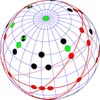

    The quantum reality paradox — What does contextually mean for real-life measurements and what does it have to do with religious questions?



    FQXi logo

    This package is part of our Who's watching? The physics of observers project, run in collaboration with FQXi. Click here to see more articles and videos about questions to do with observers in physics.

    Read more about...
    The physics of observers
    contextuality
    quantum mechanics
    Kochen-Specker theorem
    video
    University of Cambridge
    • Log in or register to post comments

    Read more about...

    The physics of observers
    contextuality
    quantum mechanics
    Kochen-Specker theorem
    video
    University of Cambridge
    University of Cambridge logo

    Plus is part of the family of activities in the Millennium Mathematics Project.
    Copyright © 1997 - 2025. University of Cambridge. All rights reserved.

    Terms