
Home
plus.maths.org

Secondary menu

  • My list
  • About Plus
  • Sponsors
  • Subscribe
  • Contact Us
  • Log in
  • Main navigation

  • Home
  • Articles
  • Collections
  • Podcasts
  • Maths in a minute
  • Puzzles
  • Videos
  • Topics and tags
  • For

    • cat icon
      Curiosity
    • newspaper icon
      Media
    • graduation icon
      Education
    • briefcase icon
      Policy

    Popular topics and tags

    Shapes

    • Geometry
    • Vectors and matrices
    • Topology
    • Networks and graph theory
    • Fractals

    Numbers

    • Number theory
    • Arithmetic
    • Prime numbers
    • Fermat's last theorem
    • Cryptography

    Computing and information

    • Quantum computing
    • Complexity
    • Information theory
    • Artificial intelligence and machine learning
    • Algorithm

    Data and probability

    • Statistics
    • Probability and uncertainty
    • Randomness

    Abstract structures

    • Symmetry
    • Algebra and group theory
    • Vectors and matrices

    Physics

    • Fluid dynamics
    • Quantum physics
    • General relativity, gravity and black holes
    • Entropy and thermodynamics
    • String theory and quantum gravity

    Arts, humanities and sport

    • History and philosophy of mathematics
    • Art and Music
    • Language
    • Sport

    Logic, proof and strategy

    • Logic
    • Proof
    • Game theory

    Calculus and analysis

    • Differential equations
    • Calculus

    Towards applications

    • Mathematical modelling
    • Dynamical systems and Chaos

    Applications

    • Medicine and health
    • Epidemiology
    • Biology
    • Economics and finance
    • Engineering and architecture
    • Weather forecasting
    • Climate change

    Understanding of mathematics

    • Public understanding of mathematics
    • Education

    Get your maths quickly

    • Maths in a minute

    Main menu

  • Home
  • Articles
  • Collections
  • Podcasts
  • Maths in a minute
  • Puzzles
  • Videos
  • Topics and tags
  • Audiences

    • cat icon
      Curiosity
    • newspaper icon
      Media
    • graduation icon
      Education
    • briefcase icon
      Policy

    Secondary menu

  • My list
  • About Plus
  • Sponsors
  • Subscribe
  • Contact Us
  • Log in
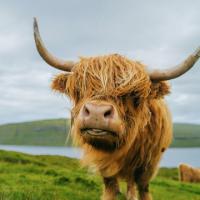
  • Highland Cow in need of a haircut

    Monochromatic cows

    1 September, 1998
    September 1998


    The following is a fallacious proof that "all cows in a field are the same colour". A quick trip out into the countryside will soon provide a counter-example to the Theorem - but where's the flaw in the argument?

    Theorem: All cows in a field are the same colour

    Proof by induction on the number of cows

    Induction hypothesis: n cows in a field are the same colour, for all n=1,2,3,4,...

    Initial Step Clearly one cow in a field is the same colour as itself, so the induction hypothesis is true for n=1.

    Induction Step Now suppose n is at least 1, we have n cows in a field F, and that the induction hypothesis has been proved for all fields containing at most n cows. By the induction hypothesis all the cows in F are the same colour.

    Firstly, remove any cow from F and put it to one side. Now take a cow from some other field and put it in field F. We again have n cows in field F, so by the induction hypothesis they are all the same colour. Finally, put back the first cow you thought of. We already know that it's the same colour as all the other cows in F, and so now we have n+1 cows in field F, and they're all the same colour. This completes the induction step!

    Q.E.D.

    Solution

    • Log in or register to post comments

    Anonymous

    26 July 2013

    Permalink
    Comment

    Induction hypothesis is governed by principle ordering which has been neglected when we remove 1 cow from the set and replace with another random one outside the set.

    • Log in or register to post comments

    Read more about...

    puzzle
    induction
    University of Cambridge logo

    Plus is part of the family of activities in the Millennium Mathematics Project.
    Copyright © 1997 - 2025. University of Cambridge. All rights reserved.

    Terms