








group theory
The Abel Prize 2009 goes to Mikhail Gromov
The work of Donald Coxeter, who died on 31 March 2003, will continue to inspire both mathematicians and artists.

Tope Omitola looks back at the tragically short but inspiringly productive life of a true original: Evariste Galois.

Levitation, magical weight loss and perpetual motion — these are just some of the tricks that have been attributed to things that spin. So do gyroscopes need their very own version of physics? Hugh Hunt debunks some myths.

With the credit crunch dominating the news, columnists have been wailing about "chaos in the markets", and "turbulent" share prices. But what does move the markets? Are they deterministic, or a result of chance? Colva Roney-Dougal explores the maths, from chaos to group theory.

Levitation, magical weight loss and perpetual motion — these are just some of the tricks that have been attributed to things that spin. So do gyroscopes need their very own version of physics? Hugh Hunt debunks some myths.

Levitation, magical weight loss and perpetual motion — these are just some of the tricks that have been attributed to things that spin. So do gyroscopes need their very own version of physics? Hugh Hunt debunks some myths.
Mathematicians pin down symmetry

Levitation, magical weight loss and perpetual motion — these are just some of the tricks that have been attributed to things that spin. So do gyroscopes need their very own version of physics? Hugh Hunt debunks some myths.
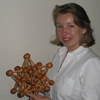
A Beautiful Mathematical Method for Modelling Viruses

Groups are some of the most fundamental objects in maths. Take a system of interacting objects and strip it to the bone to see what makes it tick, and very often you're faced with a group. Colva Roney-Dougal takes us into their abstract world and puzzles over a game of Solitaire.
What's the risk of climate change or passive smoking? Why do penguins rotate their eggs? What makes mathematicians reach out for god? And how did we evolve the maths behind these questions? Find some answers in this political, psychological, philosophical and physical issue of Plus, and do some real sums with our interactive checker board.
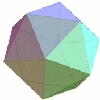
Enormous is the right word: this theorem's proof spans over 10,000 pages in 500 journal articles and no-one today understands all its details. So what does the theorem say? Richard Elwes has a short and sweet introduction.

Prestigious mathematics prize goes to group theorists
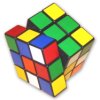
Computer scientists prove how long it should take you to solve Rubik's cube