
Home
plus.maths.org

Secondary menu

  • My list
  • About Plus
  • Sponsors
  • Subscribe
  • Contact Us
  • Log in
  • Main navigation

  • Home
  • Articles
  • Collections
  • Podcasts
  • Maths in a minute
  • Puzzles
  • Videos
  • Topics and tags
  • For

    • cat icon
      Curiosity
    • newspaper icon
      Media
    • graduation icon
      Education
    • briefcase icon
      Policy

    Popular topics and tags

    Shapes

    • Geometry
    • Vectors and matrices
    • Topology
    • Networks and graph theory
    • Fractals

    Numbers

    • Number theory
    • Arithmetic
    • Prime numbers
    • Fermat's last theorem
    • Cryptography

    Computing and information

    • Quantum computing
    • Complexity
    • Information theory
    • Artificial intelligence and machine learning
    • Algorithm

    Data and probability

    • Statistics
    • Probability and uncertainty
    • Randomness

    Abstract structures

    • Symmetry
    • Algebra and group theory
    • Vectors and matrices

    Physics

    • Fluid dynamics
    • Quantum physics
    • General relativity, gravity and black holes
    • Entropy and thermodynamics
    • String theory and quantum gravity

    Arts, humanities and sport

    • History and philosophy of mathematics
    • Art and Music
    • Language
    • Sport

    Logic, proof and strategy

    • Logic
    • Proof
    • Game theory

    Calculus and analysis

    • Differential equations
    • Calculus

    Towards applications

    • Mathematical modelling
    • Dynamical systems and Chaos

    Applications

    • Medicine and health
    • Epidemiology
    • Biology
    • Economics and finance
    • Engineering and architecture
    • Weather forecasting
    • Climate change

    Understanding of mathematics

    • Public understanding of mathematics
    • Education

    Get your maths quickly

    • Maths in a minute

    Main menu

  • Home
  • Articles
  • Collections
  • Podcasts
  • Maths in a minute
  • Puzzles
  • Videos
  • Topics and tags
  • Audiences

    • cat icon
      Curiosity
    • newspaper icon
      Media
    • graduation icon
      Education
    • briefcase icon
      Policy

    Secondary menu

  • My list
  • About Plus
  • Sponsors
  • Subscribe
  • Contact Us
  • Log in
  • BloodCounts!

    6 June, 2023

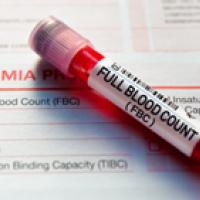
    Did you know that when your doctor orders you to have a full blood count, most of the measurements made from your blood go to waste without every being recorded? This data represents an untapped goldmine of information that could be used to spot outbreaks of infectious diseases and patients at risk from particular diseases.

    The BloodCounts! project is working to make best use of this information, using a form of artificial intelligence called machine learning. When it's operational it will be of the largest-scale applications yet of machine learning in medicine and healthcare.

    Find out more about the BloodCounts! project, as well as the maths behind it, with the following articles.
    Revolutionising the power of blood tests using AI — What is BloodCounts!, what will it do, and what are the challenges?

    Mathematical snapshots: Daniel Kreuter — We talk to PhD student Daniel Kreuter about what it's like working with BloodCounts! as an early career researcher.

    Maths in a minute: Machine learning and neural networks — A quick introduction to the type of algorithm that lies behind BloodCounts!
    Maths in a minute: Semi-supervised machine learning — Machine learning started with supervised learning and us providing all the training materials, but we are finding ways for algorithms to learn with far fewer resources.

    Read more about...
    CCIMI
    CMIH
    medicine and health
    machine learning
    artificial intelligence
    University of Cambridge
    BloodCounts!
    • Log in or register to post comments

    Read more about...

    CCIMI
    CMIH
    medicine and health
    machine learning
    artificial intelligence
    University of Cambridge
    BloodCounts!
    University of Cambridge logo

    Plus is part of the family of activities in the Millennium Mathematics Project.
    Copyright © 1997 - 2025. University of Cambridge. All rights reserved.

    Terms