Living Proof: Building digital hearts
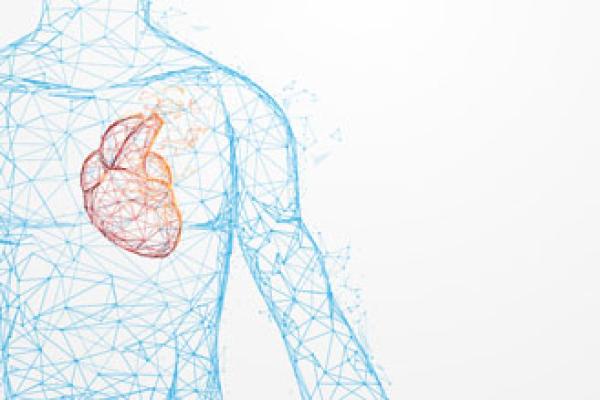
A digital heart might sound like science fiction, but these personalised mathematical descriptions of patients' hearts are already being put to the test.
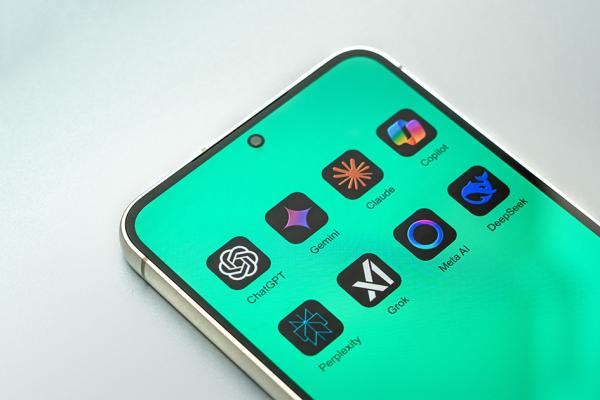
How confident is the Large Language Model chatbot that its answers are correct? And how confident can we be about this confidence? This article investigates.
One of our favourite colleagues here at the University of Cambridge is Professor of Applied Mathematics Carola-Bibiane Schönlieb. We have had the pleasure to work with her quite a bit over the last few years.
Proof assistants might be important in the future. What if we could get AI to use them for example?
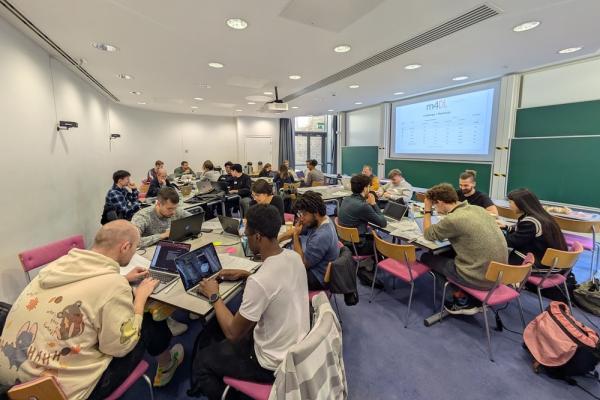
We join Maths4DL researchers for an intensive hackathon working on some of the most challenging problems posed by artificial intelligence.
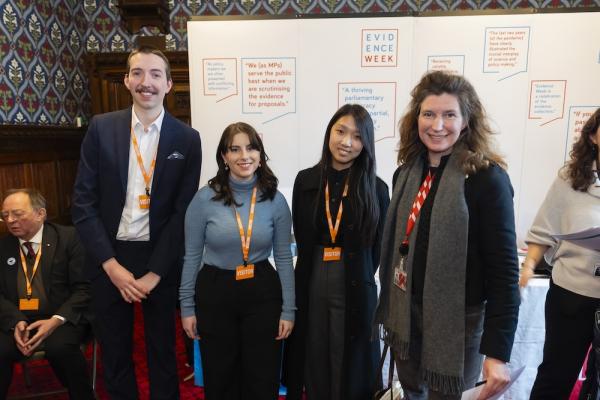
To make informed decisions regarding AI politicians need to talk to the mathematicians and scientists who develop it. In this episode of Maths on the Move we report on Evidence Week, an event in Parliament that enabled mathematicians and policy makers to exchange ideas.
The type of AI currently in use is based purely on data. How much more powerful would it be if it also has access to humanity's vast knowledge of physics? Find out more in this collection of content.
Combining AI with human knowledge of physics may lead to powerful applications in a range of areas — from weather forecasting to engineering.
Yolanne Lee, A PhD student for the Maths4DL research project, tells us about what she thinks AI will be able to do in the near future, what it has to do with cats and dogs, and how music provided her first experience of science.
Artificial intelligence algorithms are often trained on people's personal data. How can we make sure that this data remains private?
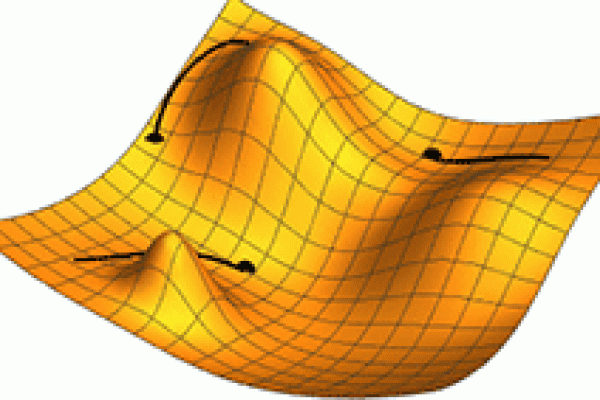
How does artificial intelligence manage to produce reliable outputs? Stochastic gradient descent has the answer!
The advent of artificial intelligence poses new threats to the privacy of our personal data. We explore the challenges and a way to address them.