
Millions for maths
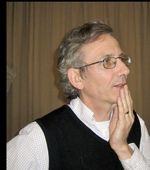
Simon Donaldson. Image: Gert-Martin Greuel.

Five mathematicians turned into millionaires this week when they were awarded the Breakthrough Prize set up by Facebook founder Mark Zuckerberg and internet entrepreneur Yuri Milner. Simon Donaldson, Maxim Kontsevich, Jacob Lurie, Terry Tao and Richard Taylor will each receive £1.8m. That's more than the £930,000 that's awarded for the Nobel prize and should make up for the fact neither of the five is likely to ever to receive a Nobel: there isn't one for mathematics.
It's the first time this prize has been awarded to mathematicians. It joins a string of other prizes Milner has set up to reward physicists and life scientists. The idea is to give mathematicians (and other scientists) the "rock star status" they deserve. "We think scientists should be much better appreciated. They should be modern celebrities, alongside athletes and entertainers," Milner told the Guardian. "We want young people to get more excited. Maybe they will think of choosing a scientific path as opposed to other endeavours if we collectively celebrate them more."
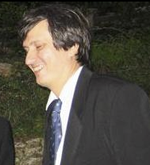
Maxim Kontsevich. Image: Gert-Martin Greuel.
The five mathematicians that have been chosen certainly made big splashes in the world of mathematics. You may have come across Richard Taylor and Terence Tao on Plus before: Taylor (among other things) helped Andrew Wiles solve a famous 350-year-old problem called Fermat's last theorem. Tao was one of the youngest people to ever receive the Fields medal (another prestigious maths prize) in 2006 and has delivered a range of ground breaking work, including on prime numbers.
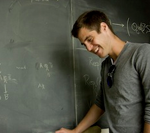
Jacob Lurie
The other three are equally eminent. Simon Donaldson (with whom we had the pleasure of working on a forthcoming series of articles) has provided deep insight into geometrical structures inspired by theoretical physics. Lurie, at 36 the youngest of the five, has also been honoured for work on the mathematical end of physics, as well as results that lie on the interface between geometry and topology on the one hand and algebra on the other. Kontsevich is also a theoretical physicist, but has been awarded the prize for an astounding range of contributions to pure maths.
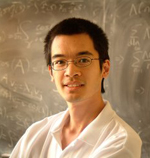
Terence Tao
Million dollar prizes are always a contentious issue. The money spent on a few individuals could be used to fund maths education at home or in developing countries, help support young researchers or those disadvantaged in some way, or fund important research projects. Milner and Zuckerberg's reply will no doubt be that a hefty prize tag, even if slightly unseemly, raises awareness and sends a clear message. Maths is essential, even the sort of pure maths that some of the laureates are being honoured for, which may at first sight seem useless. In a world of short attention spans money talks.
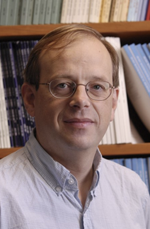
Richard Taylor.
UK mathematicians seem to have responded to the prize with mixed feelings. One unnamed mathematician cast some doubt on the prize's aim when he told the Guardian, "I find it interesting that they think it's possible to make rock stars out of people who do something that 99% of the population have no hope of understanding, and I include most professional mathematicians in that." This is something we don't agree with. While there is not much hope of explaining a mathematician's work to a general audience in great detail, it is certainly possible to give the gist of an area, and communicate its excitement, attraction and motivation. You won't convince everyone, just as you won't convince everyone of the worth of a piece of art, but you will always enthuse a few and interest many. If this is something mathematicians find hard to do themselves, then perhaps a little chunk of those millions should go towards funding maths communication.
Josephine Reitz
Very useful and interesting info, thanks!!!