Home
plus.maths.org

Secondary menu

  • My list
  • About Plus
  • Sponsors
  • Subscribe
  • Contact Us
  • Log in
  • Main navigation

  • Home
  • Articles
  • Collections
  • Podcasts
  • Maths in a minute
  • Puzzles
  • Videos
  • Topics and tags
  • For

    • cat icon
      Curiosity
    • newspaper icon
      Media
    • graduation icon
      Education
    • briefcase icon
      Policy

    Popular topics and tags

    Shapes

    • Geometry
    • Vectors and matrices
    • Topology
    • Networks and graph theory
    • Fractals

    Numbers

    • Number theory
    • Arithmetic
    • Prime numbers
    • Fermat's last theorem
    • Cryptography

    Computing and information

    • Quantum computing
    • Complexity
    • Information theory
    • Artificial intelligence and machine learning
    • Algorithm

    Data and probability

    • Statistics
    • Probability and uncertainty
    • Randomness

    Abstract structures

    • Symmetry
    • Algebra and group theory
    • Vectors and matrices

    Physics

    • Fluid dynamics
    • Quantum physics
    • General relativity, gravity and black holes
    • Entropy and thermodynamics
    • String theory and quantum gravity

    Arts, humanities and sport

    • History and philosophy of mathematics
    • Art and Music
    • Language
    • Sport

    Logic, proof and strategy

    • Logic
    • Proof
    • Game theory

    Calculus and analysis

    • Differential equations
    • Calculus

    Towards applications

    • Mathematical modelling
    • Dynamical systems and Chaos

    Applications

    • Medicine and health
    • Epidemiology
    • Biology
    • Economics and finance
    • Engineering and architecture
    • Weather forecasting
    • Climate change

    Understanding of mathematics

    • Public understanding of mathematics
    • Education

    Get your maths quickly

    • Maths in a minute

    Main menu

  • Home
  • Articles
  • Collections
  • Podcasts
  • Maths in a minute
  • Puzzles
  • Videos
  • Topics and tags
  • Audiences

    • cat icon
      Curiosity
    • newspaper icon
      Media
    • graduation icon
      Education
    • briefcase icon
      Policy

    Secondary menu

  • My list
  • About Plus
  • Sponsors
  • Subscribe
  • Contact Us
  • Log in
  • Cat

    Machine learning and artificial intelligence
    3 August, 2020
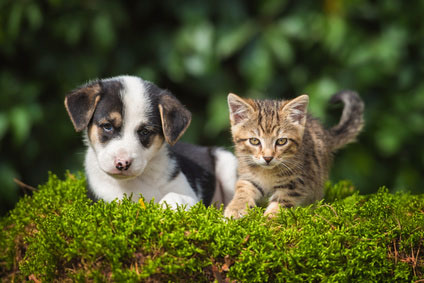
    Puppy and kitten

    How can a machine learn to distinguish a picture of a cat from a picture of a dog?

    Artificial intelligence and machines that train themselves might sound like a plot from a science fiction movie, but these things are already part of our everyday lives.

    At the Heidelberg Laureate Forum last year, Chris Budd, Professor of Applied Mathematics at the University of Bath, talked us through the basics of how these learning machines tick.

    While Raj Reddy, Turing Award winner and artificial intelligence pioneer, talked to us about his grand challenges in artificial intelligence, and why time travel and immortality might be easier to achieve than creating a machine that rivals human intelligence.

    To find out more about machine learning, its history, and some of the moral questions it raises, read the series of articles based on Chris' Gresham College lectures. And you can read all our coverage from the Heidelberg Laureate Forum.

    The music in this podcast is from Oli Freke, and the track is called "Experimental 5". You can find his music at soundcloud.

    You can listen to the podcast by clicking the download link below, and you can subscribe to our podcast feed in your podcast aggregator of choice, or directly through Apple Podcasts or Spotify.

    EMS

    This podcast was partially funded by the European Mathematical Society.


    • Log in or register to post comments
    You can listen to the podcast using the player above, and you can listen and subscribe to our podcast through Apple Podcasts, Spotify and through most other podcast providers via podbean.

    Read more about...

    machine learning
    HLF
    artificial intelligence
    agency
    computer science
    University of Cambridge logo

    Plus is part of the family of activities in the Millennium Mathematics Project.
    Copyright © 1997 - 2025. University of Cambridge. All rights reserved.

    Terms