
Home
plus.maths.org

Secondary menu

  • My list
  • About Plus
  • Sponsors
  • Subscribe
  • Contact Us
  • Log in
  • Main navigation

  • Home
  • Articles
  • Collections
  • Podcasts
  • Maths in a minute
  • Puzzles
  • Videos
  • Topics and tags
  • For

    • cat icon
      Curiosity
    • newspaper icon
      Media
    • graduation icon
      Education
    • briefcase icon
      Policy

    Popular topics and tags

    Shapes

    • Geometry
    • Vectors and matrices
    • Topology
    • Networks and graph theory
    • Fractals

    Numbers

    • Number theory
    • Arithmetic
    • Prime numbers
    • Fermat's last theorem
    • Cryptography

    Computing and information

    • Quantum computing
    • Complexity
    • Information theory
    • Artificial intelligence and machine learning
    • Algorithm

    Data and probability

    • Statistics
    • Probability and uncertainty
    • Randomness

    Abstract structures

    • Symmetry
    • Algebra and group theory
    • Vectors and matrices

    Physics

    • Fluid dynamics
    • Quantum physics
    • General relativity, gravity and black holes
    • Entropy and thermodynamics
    • String theory and quantum gravity

    Arts, humanities and sport

    • History and philosophy of mathematics
    • Art and Music
    • Language
    • Sport

    Logic, proof and strategy

    • Logic
    • Proof
    • Game theory

    Calculus and analysis

    • Differential equations
    • Calculus

    Towards applications

    • Mathematical modelling
    • Dynamical systems and Chaos

    Applications

    • Medicine and health
    • Epidemiology
    • Biology
    • Economics and finance
    • Engineering and architecture
    • Weather forecasting
    • Climate change

    Understanding of mathematics

    • Public understanding of mathematics
    • Education

    Get your maths quickly

    • Maths in a minute

    Main menu

  • Home
  • Articles
  • Collections
  • Podcasts
  • Maths in a minute
  • Puzzles
  • Videos
  • Topics and tags
  • Audiences

    • cat icon
      Curiosity
    • newspaper icon
      Media
    • graduation icon
      Education
    • briefcase icon
      Policy

    Secondary menu

  • My list
  • About Plus
  • Sponsors
  • Subscribe
  • Contact Us
  • Log in
  • Maths for the future
    20 August, 2014

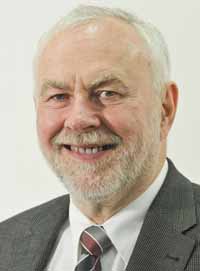
    Martin Grötschel. Image: TU Berlin/Pressestelle/Ulrich Dahl

    "Anyone can learn mathematics, if it's taught appropriately," says Martin Grötschel, Secretary of the International Mathematical Union (IMU). That's an important statement, since mathematics has never been so important to society as a whole than it is now. We talk to Grötschel about the challenges that lie ahead, from teaching maths at school to integrating mathematicians from developing nations, and the role of the IMU in building the future of maths. We also talk about creativity in maths and Grötschel's dream of making all mathematical works ever produced freely available online.

    • Log in or register to post comments

    Anonymous

    3 September 2014

    Permalink

    As a teacher one of the most powerful comments from this was in talking about the measure of a person/mathematician: " Make personal evaluations, don't rely on numbers and try to use a more holistic approach." Highlighting for me that students should never become their assessment results, reduced to a number alone!

    His point about needing good mathematics teaching at every level sounded very positive too, particularly combined with the "Learning recipes is not a good way to learn mathematics" - how true!

    A fabulously interesting interview, thank you.

    • Log in or register to post comments
    You can listen to the podcast using the player above, and you can listen and subscribe to our podcast through Apple Podcasts, Spotify and through most other podcast providers via podbean.

    Read more about...

    fields medal
    Fields Medal 2014
    ICM 2014
    RSS ICM
    University of Cambridge logo

    Plus is part of the family of activities in the Millennium Mathematics Project.
    Copyright © 1997 - 2025. University of Cambridge. All rights reserved.

    Terms