
Home
plus.maths.org

Secondary menu

  • My list
  • About Plus
  • Sponsors
  • Subscribe
  • Contact Us
  • Log in
  • Main navigation

  • Home
  • Articles
  • Collections
  • Podcasts
  • Maths in a minute
  • Puzzles
  • Videos
  • Topics and tags
  • For

    • cat icon
      Curiosity
    • newspaper icon
      Media
    • graduation icon
      Education
    • briefcase icon
      Policy

    Popular topics and tags

    Shapes

    • Geometry
    • Vectors and matrices
    • Topology
    • Networks and graph theory
    • Fractals

    Numbers

    • Number theory
    • Arithmetic
    • Prime numbers
    • Fermat's last theorem
    • Cryptography

    Computing and information

    • Quantum computing
    • Complexity
    • Information theory
    • Artificial intelligence and machine learning
    • Algorithm

    Data and probability

    • Statistics
    • Probability and uncertainty
    • Randomness

    Abstract structures

    • Symmetry
    • Algebra and group theory
    • Vectors and matrices

    Physics

    • Fluid dynamics
    • Quantum physics
    • General relativity, gravity and black holes
    • Entropy and thermodynamics
    • String theory and quantum gravity

    Arts, humanities and sport

    • History and philosophy of mathematics
    • Art and Music
    • Language
    • Sport

    Logic, proof and strategy

    • Logic
    • Proof
    • Game theory

    Calculus and analysis

    • Differential equations
    • Calculus

    Towards applications

    • Mathematical modelling
    • Dynamical systems and Chaos

    Applications

    • Medicine and health
    • Epidemiology
    • Biology
    • Economics and finance
    • Engineering and architecture
    • Weather forecasting
    • Climate change

    Understanding of mathematics

    • Public understanding of mathematics
    • Education

    Get your maths quickly

    • Maths in a minute

    Main menu

  • Home
  • Articles
  • Collections
  • Podcasts
  • Maths in a minute
  • Puzzles
  • Videos
  • Topics and tags
  • Audiences

    • cat icon
      Curiosity
    • newspaper icon
      Media
    • graduation icon
      Education
    • briefcase icon
      Policy

    Secondary menu

  • My list
  • About Plus
  • Sponsors
  • Subscribe
  • Contact Us
  • Log in
  • Eggs and bunnies solution
    1 May, 2005
    May 2005

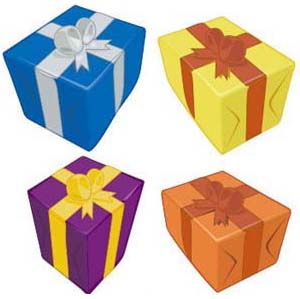
    four wrapped presents

    Eggs and bunnies

    Easter is coming and it's time to start enjoying all those chocolate treats. In my household we have four beautifully wrapped boxes, which I bought at the same time from the same shop, but unfortunately I have forgotten exactly what is inside.

    What I can remember is this: There are four boxes and each contains either a chocolate bunny, or a chocolate egg, and the chocolate is either white, or dark. I lay out the boxes in a row and after thinking for a moment I remember a little bit about what I bought.

    The first box definitely contains an egg, the second definitely contains a bunny, the third is definitely made of white chocolate and the last one is definitely made of dark chocolate.

    Being a budding chocolate lover, my son, James, wants me to confirm that all the bunnies I bought are made of dark chocolate. Now, I'm fairly sure that all the bunnies I bought were made of dark chocolate and I know that I can confirm this by opening only two of the boxes, but which boxes do I need to open?

    The solution

    A little logical thinking is all that is needed here. The colour of the egg in the first box is irrelevant, it is essential to open the second box to check that the chocolate bunny it contains is made of dark chocolate, it is also essential to open the third box to check that the white chocolate treat inside isn't a bunny and what is in the fourth box is irrelevant because it is definitely dark chocolate.

    So the answer is: check that the second box contains dark chocolate and the third box contains an egg.


    Back to main puzzle page
    • Log in or register to post comments
    University of Cambridge logo

    Plus is part of the family of activities in the Millennium Mathematics Project.
    Copyright © 1997 - 2025. University of Cambridge. All rights reserved.

    Terms