
Home
plus.maths.org

Secondary menu

  • My list
  • About Plus
  • Sponsors
  • Subscribe
  • Contact Us
  • Log in
  • Main navigation

  • Home
  • Articles
  • Collections
  • Podcasts
  • Maths in a minute
  • Puzzles
  • Videos
  • Topics and tags
  • For

    • cat icon
      Curiosity
    • newspaper icon
      Media
    • graduation icon
      Education
    • briefcase icon
      Policy

    Popular topics and tags

    Shapes

    • Geometry
    • Vectors and matrices
    • Topology
    • Networks and graph theory
    • Fractals

    Numbers

    • Number theory
    • Arithmetic
    • Prime numbers
    • Fermat's last theorem
    • Cryptography

    Computing and information

    • Quantum computing
    • Complexity
    • Information theory
    • Artificial intelligence and machine learning
    • Algorithm

    Data and probability

    • Statistics
    • Probability and uncertainty
    • Randomness

    Abstract structures

    • Symmetry
    • Algebra and group theory
    • Vectors and matrices

    Physics

    • Fluid dynamics
    • Quantum physics
    • General relativity, gravity and black holes
    • Entropy and thermodynamics
    • String theory and quantum gravity

    Arts, humanities and sport

    • History and philosophy of mathematics
    • Art and Music
    • Language
    • Sport

    Logic, proof and strategy

    • Logic
    • Proof
    • Game theory

    Calculus and analysis

    • Differential equations
    • Calculus

    Towards applications

    • Mathematical modelling
    • Dynamical systems and Chaos

    Applications

    • Medicine and health
    • Epidemiology
    • Biology
    • Economics and finance
    • Engineering and architecture
    • Weather forecasting
    • Climate change

    Understanding of mathematics

    • Public understanding of mathematics
    • Education

    Get your maths quickly

    • Maths in a minute

    Main menu

  • Home
  • Articles
  • Collections
  • Podcasts
  • Maths in a minute
  • Puzzles
  • Videos
  • Topics and tags
  • Audiences

    • cat icon
      Curiosity
    • newspaper icon
      Media
    • graduation icon
      Education
    • briefcase icon
      Policy

    Secondary menu

  • My list
  • About Plus
  • Sponsors
  • Subscribe
  • Contact Us
  • Log in
  • A knight's nightmare solution
    1 December, 2005
    December 2005

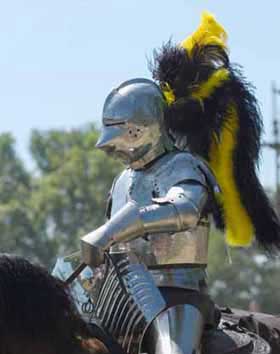
    A knight

    A knight's nightmare

    Imagine a chess board with $n\times n $ squares, $n$ on each side. Now imagine a knight moving around the board - only using the moves that are allowed to a knight of course - so that each square of the board is visited exactly once, and so that the knight ends up on the same square as it started. Such a tour is called a closed knight's tour (it's closed because the knight ends where it started). If you start experimenting on an ordinary chess board, you'll soon see that it's no easy feat to find a closed knight's tour. People have been entertaining themselves with this pursuit for centuries. The earliest recorded example of a knight's tour on the ordinary $ 8\times 8$ board came from al-Adli ar-Rumi, who lived in Baghdad around 840AD. There are also example of knight's tours of $10\times 10 $ and $12\times 12 $ boards.

    But no-one has ever found a closed knight's tour on an $ n\times n $ board when $n$ is odd. Can you prove why this is, in fact, impossible?

    If you're poetically minded, try this one: find a knight's tour on this $8\times 8$ board, so that the syllables on the squares, when read in the sequence of the tour, form a verse (note that this time you're not asked for a closed knight's tour - it does not have to end at the same place it started).

    With white -gle from -lant black a star-
    square the knight and sin- -ted gal- of
    did nerve And -where And twice He -sing
    prove Nor king's on it -ny land A
    of once he back -ting -main mis- might
    came to res- do- a- to fire the
    a- steel his -gain To heart -full -out
    all a- -spire and power- With- roam of

    The solution

    Assume that the knight starts out on a white square (the argument will be the same if it starts out on a black square). Because of the way a knight moves in Chess, the next square it lands on will be black. To complete a closed knight's tour, the knight has to make $n\times n $ moves. Since $n$ is an odd number, $ n \times n$ is also odd, so the knight has to make an odd number of moves. But this means that it will end on a black square, since the colour of the square changes with each move. This is a contradiction, because the knight has to start and end on a white square.

    The solution to the "cryptotour" is the verse

    With nerve of steel and heart of fire
    A gallant knight did once aspire
    To roam the land of black and white
    And prove to all his powerful might.
    He started from the King's domain
    And back again to it he came
    Without missing a single square
    Nor resting twice on anywhere.


    Back to main puzzle page
    • Log in or register to post comments
    University of Cambridge logo

    Plus is part of the family of activities in the Millennium Mathematics Project.
    Copyright © 1997 - 2025. University of Cambridge. All rights reserved.

    Terms